MATI-42
INITIALIZING ARCHIVE...
Archive Entrance · 01

MATI-42

The Re:pairing of the Ruins

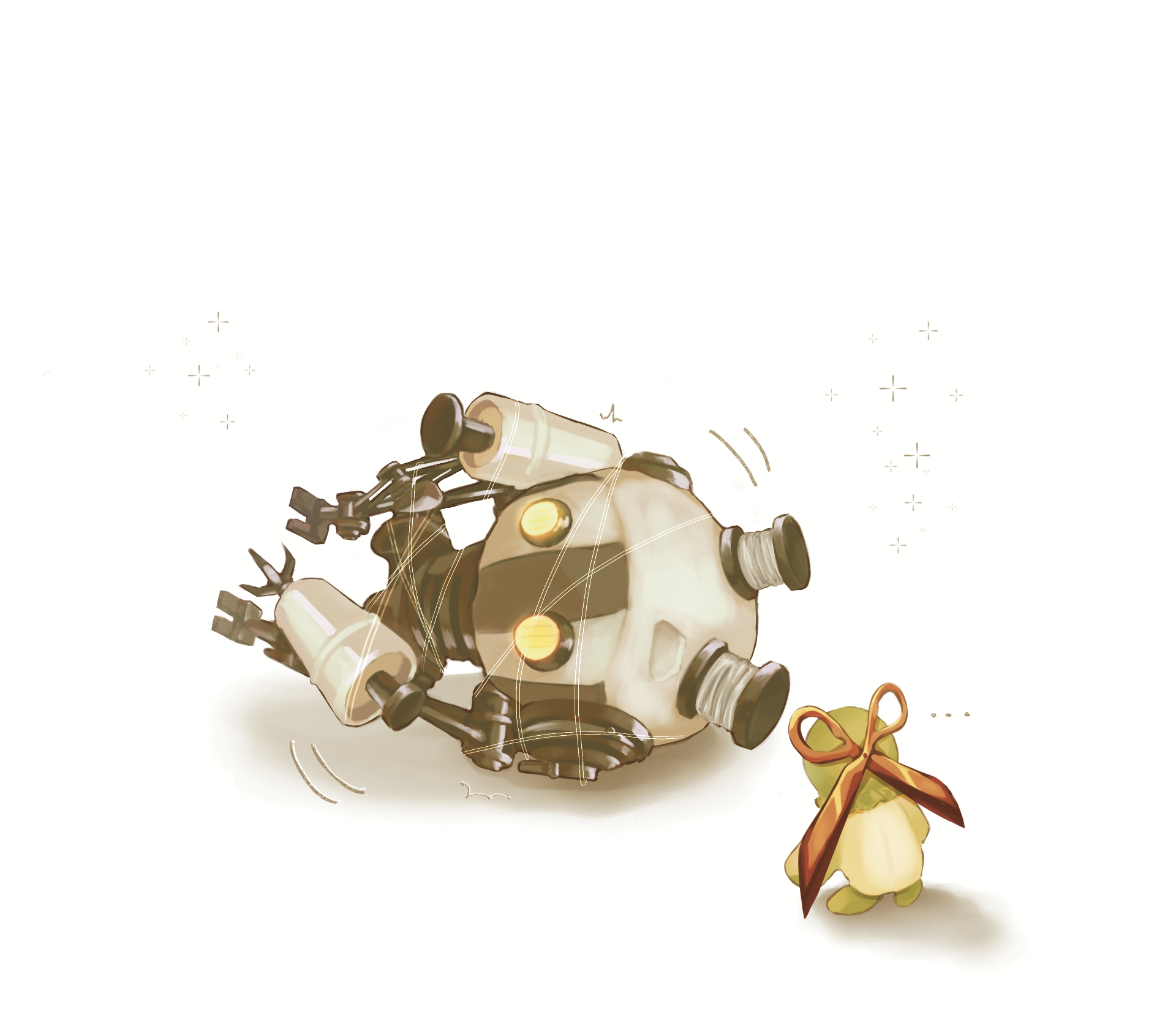
A small repair robot stitching forgotten things back together.
Not a destroyer — a stitcher.

REC · 02 / 09

Origin Record

Ideation · World Building · Concept Development

The world of MATI-42 is not destroyed — it is abandoned. Humanity has not been erased by catastrophe but has quietly disappeared, leaving behind a landscape of half-finished things: tools still on workbenches, doors left open, stitches mid-seam.

MATI-42 moves through this stillness not as a survivor, but as a caretaker. It does not know what it is repairing for, only that repair is what it does.
Concept Keywords
Warm Post-Apocalypse Steampunk Workshop Old Fairytale Repair & Stitch Rust + Thread + Metal Abandoned Not Destroyed Small Lives Quiet Recovery
Mood Board · World Atmosphere
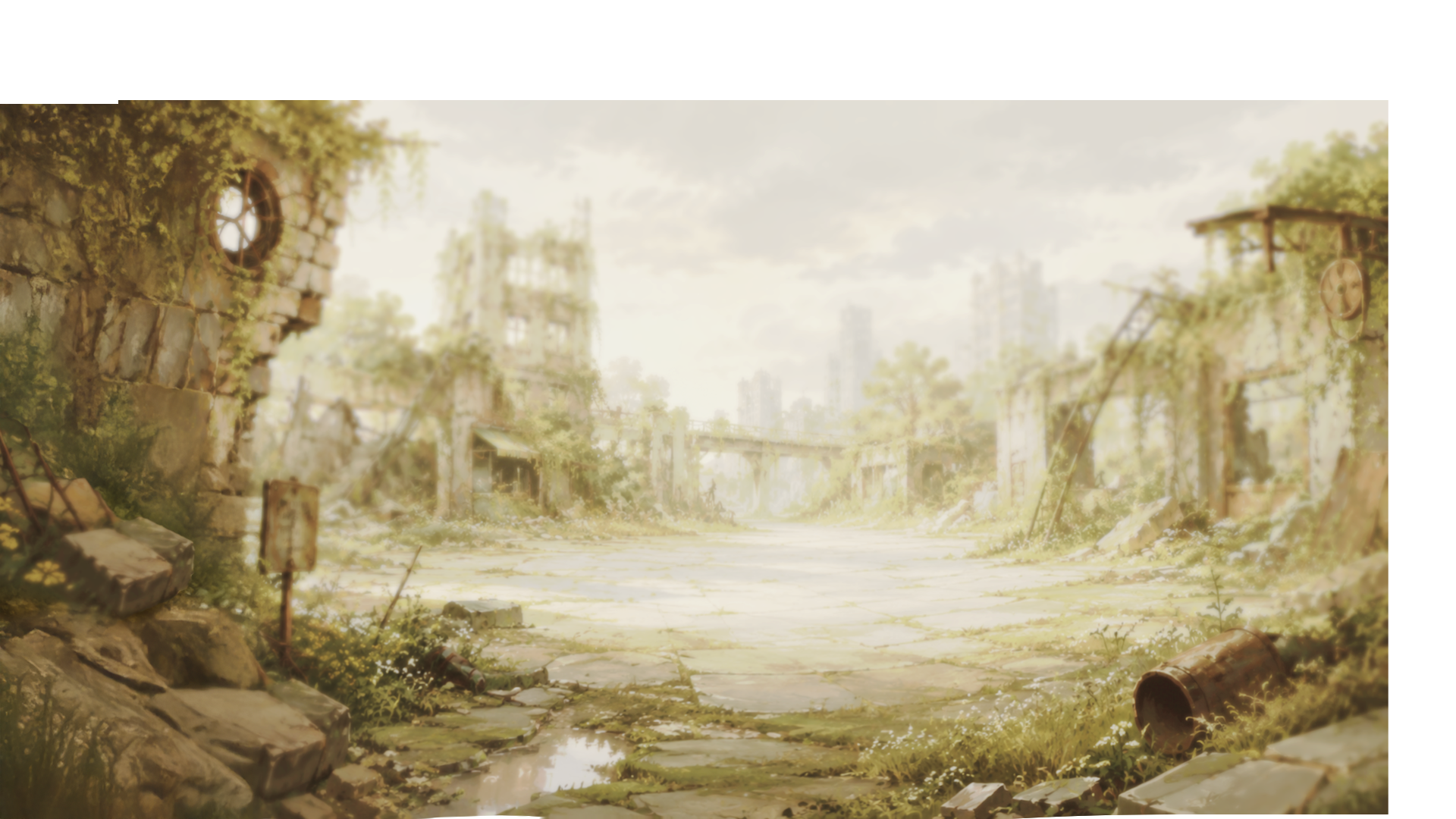
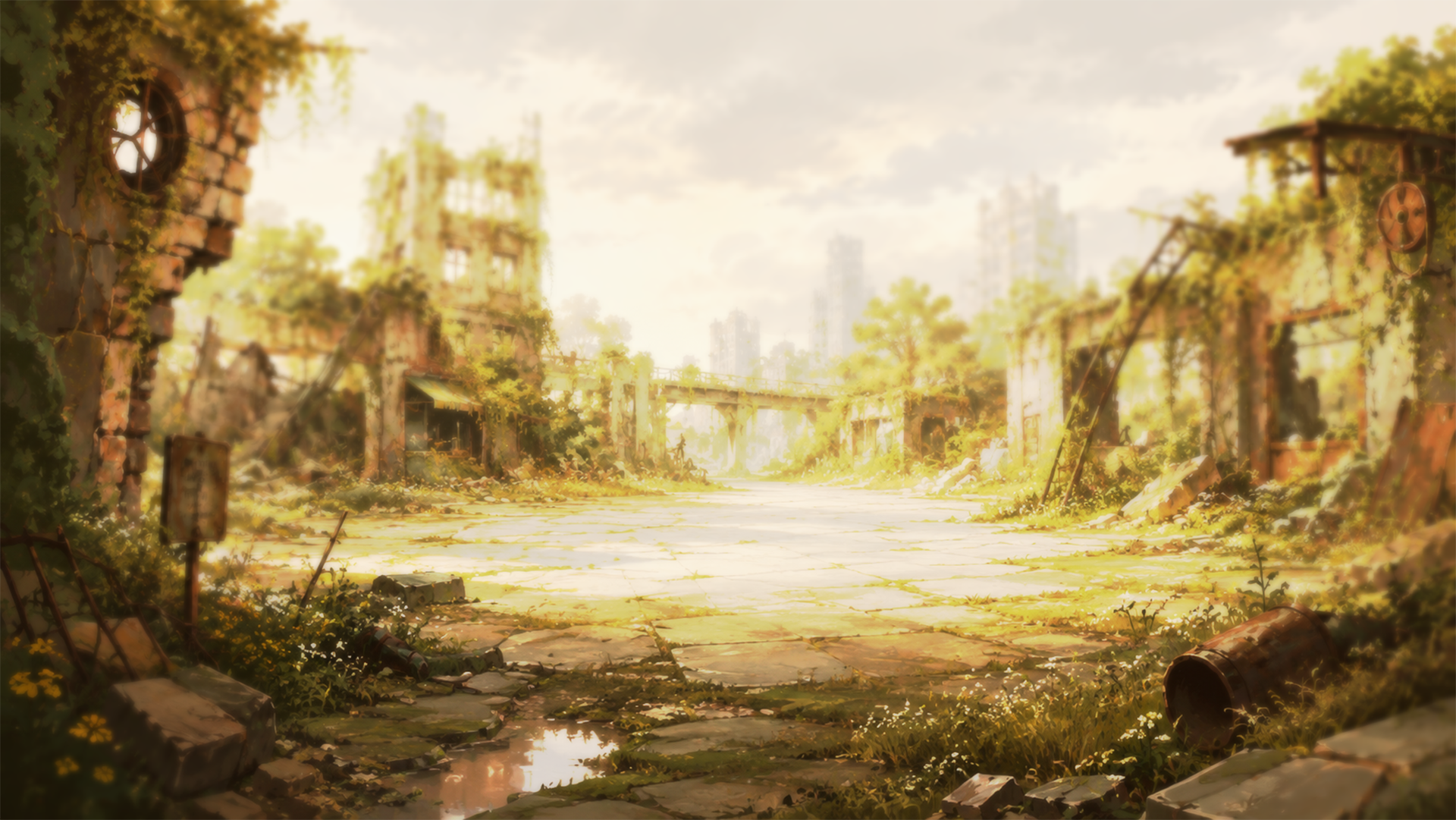
World atmosphere background
World Setting — abandoned, warm, overgrown
Mood reference — dystopia and nature
Initial mood reference — dystopia meets nature
Concept art 1
Concept Art 01
World reference sketch
World reference — texture and light
Concept Evolution · From Idea to Direction
Phase 01
Dystopia Reference
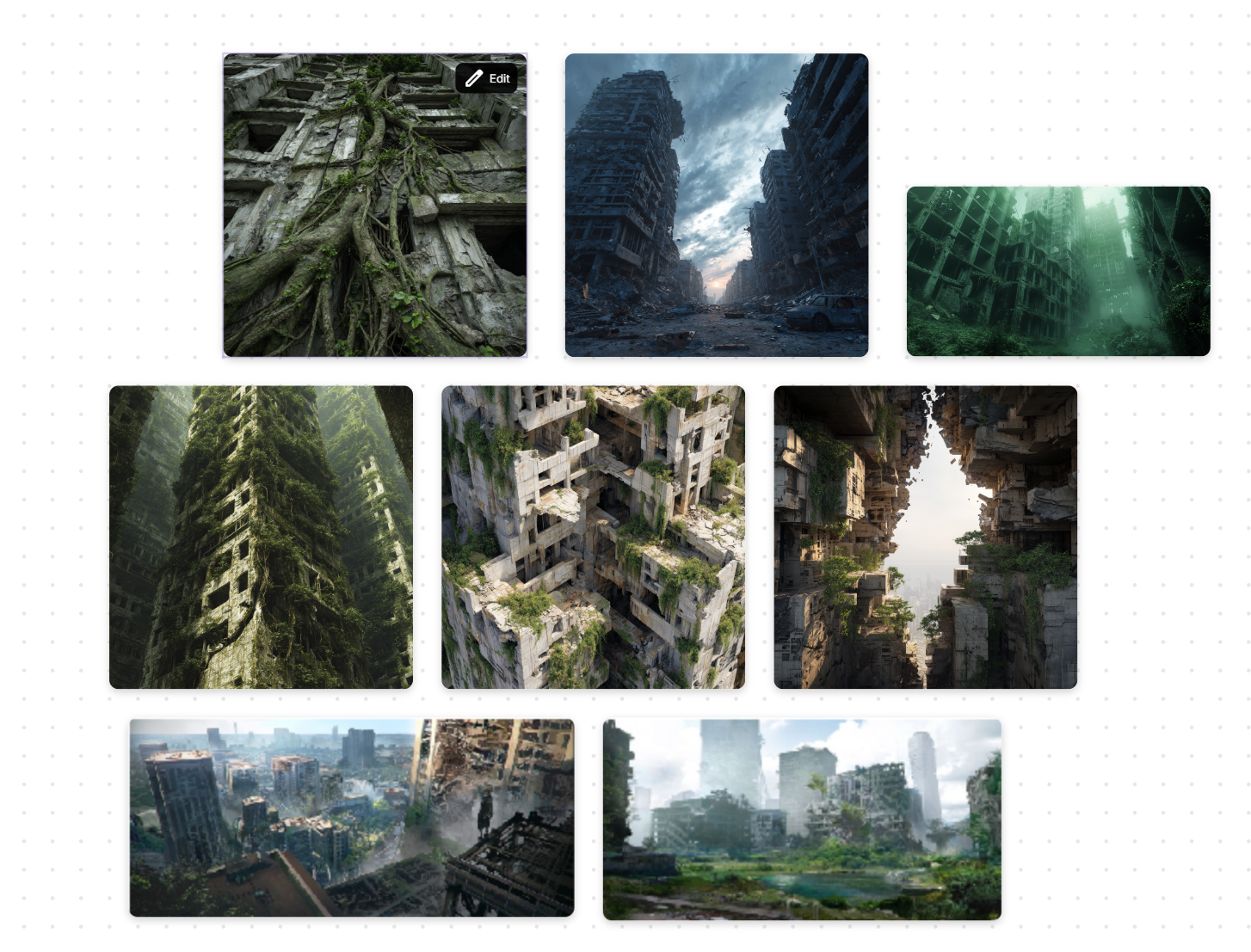
Started with typical dystopian imagery — collapsed infrastructure, grey skies, silent factories. The initial mood was heavy and cold.
Phase 02
Pivot: Abandoned ≠ Destroyed
Key realization: "abandoned" is warmer and more uncanny than "destroyed." The world should feel as if people stepped away mid-task — not blown apart. This opened up the workshop and repair aesthetic.
Phase 03
The Repair Robot Concept
A small mechanical character who does not know why it repairs, only that it does. The character became the emotional center — a quiet, stubborn agent of small recoveries.
Phase 04 · Final
Worn Fairytale for Adults
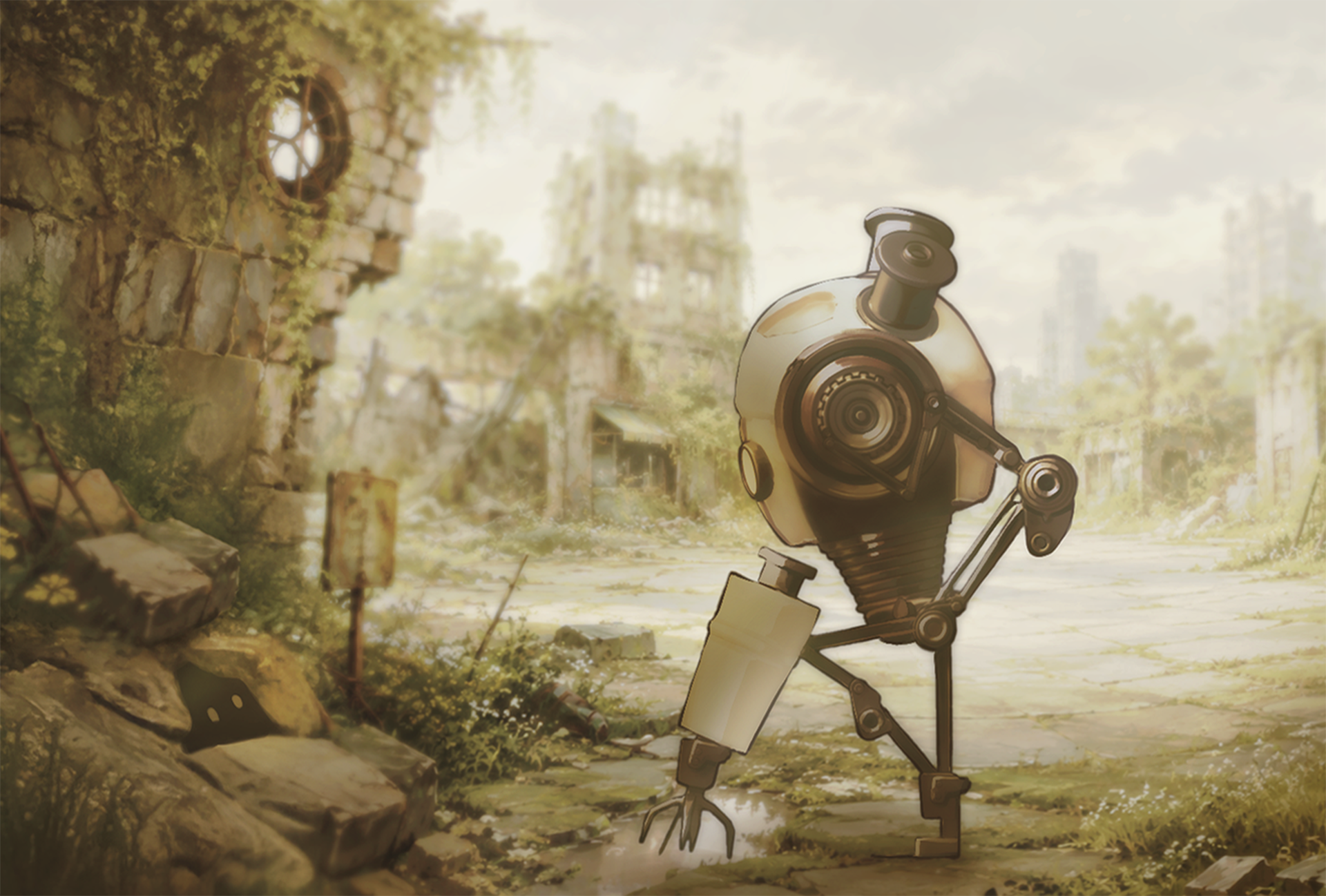
The final tone: an old storybook that's been handled too many times. Stitching, thread, rust, warm light. A machine that does not destroy, but repairs.
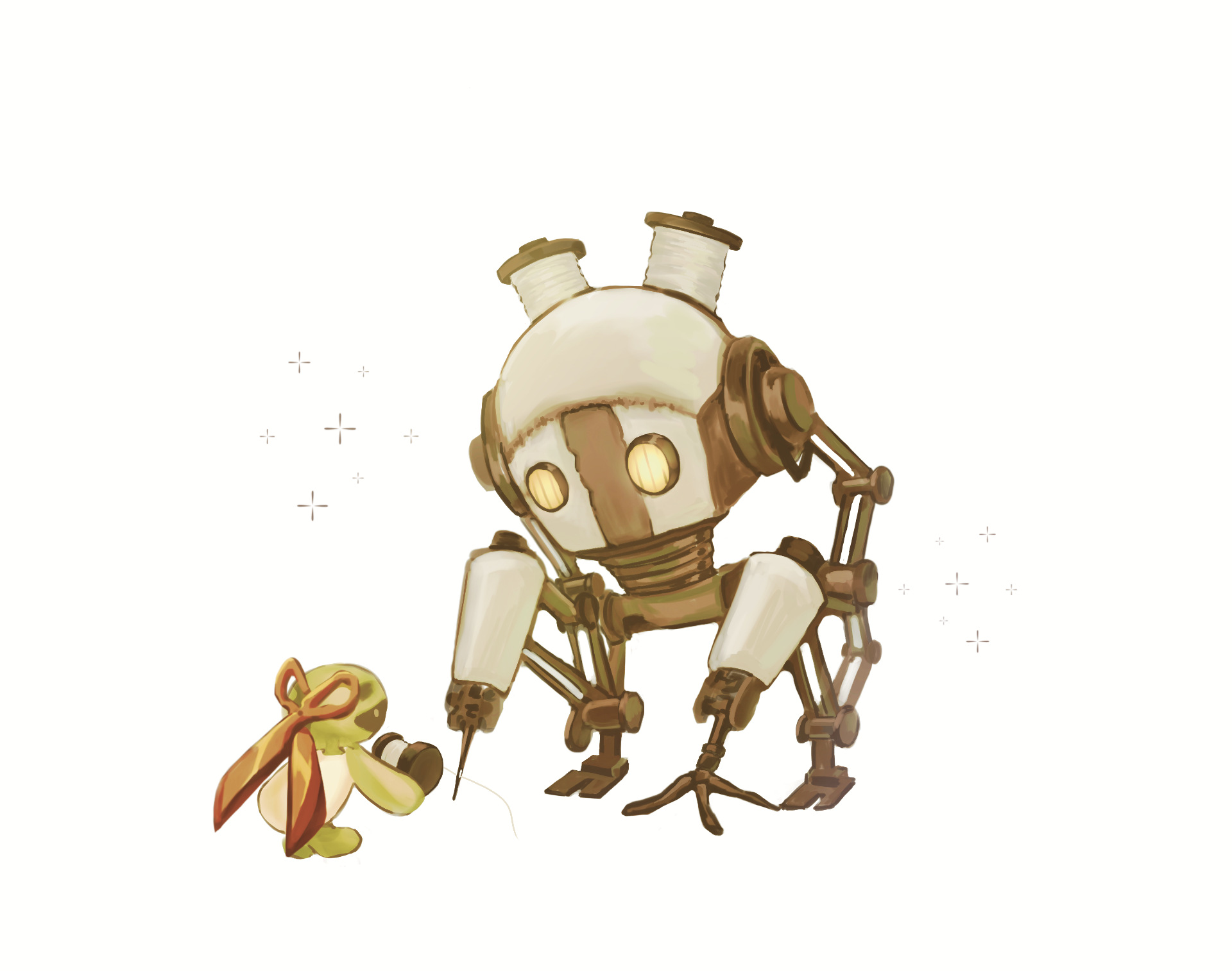
REC · 03 / 09

Image Experiment Log

AI Generation · Selection · Influence on Final Design

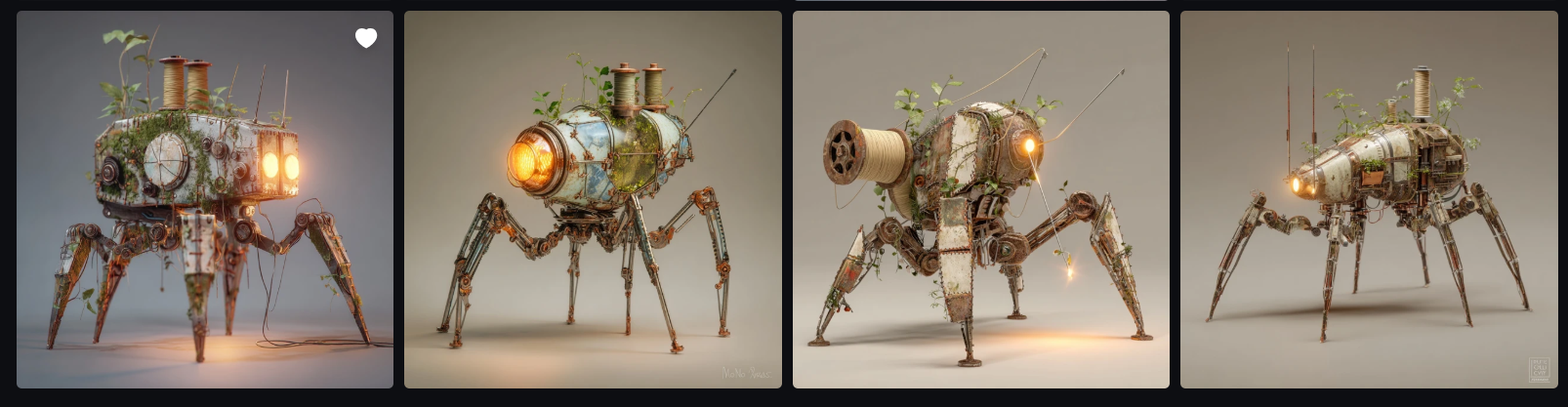
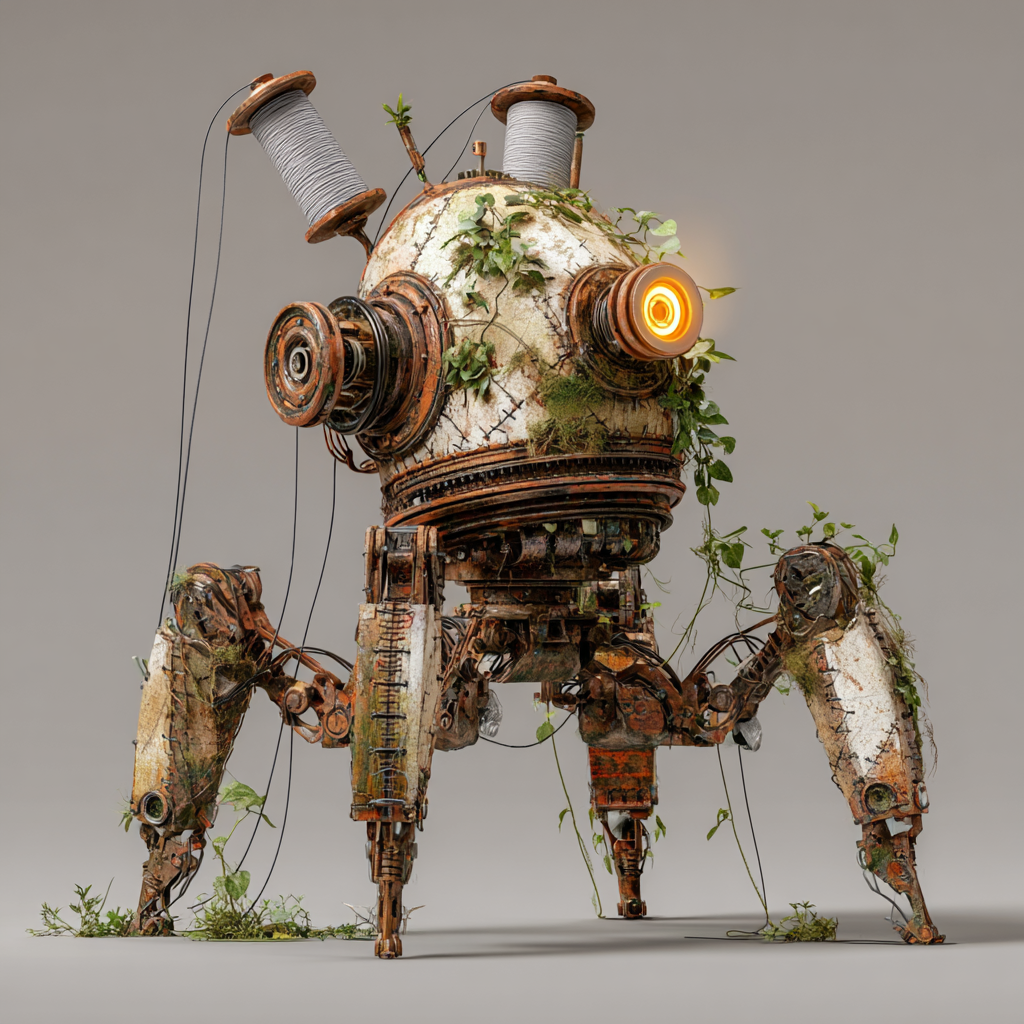
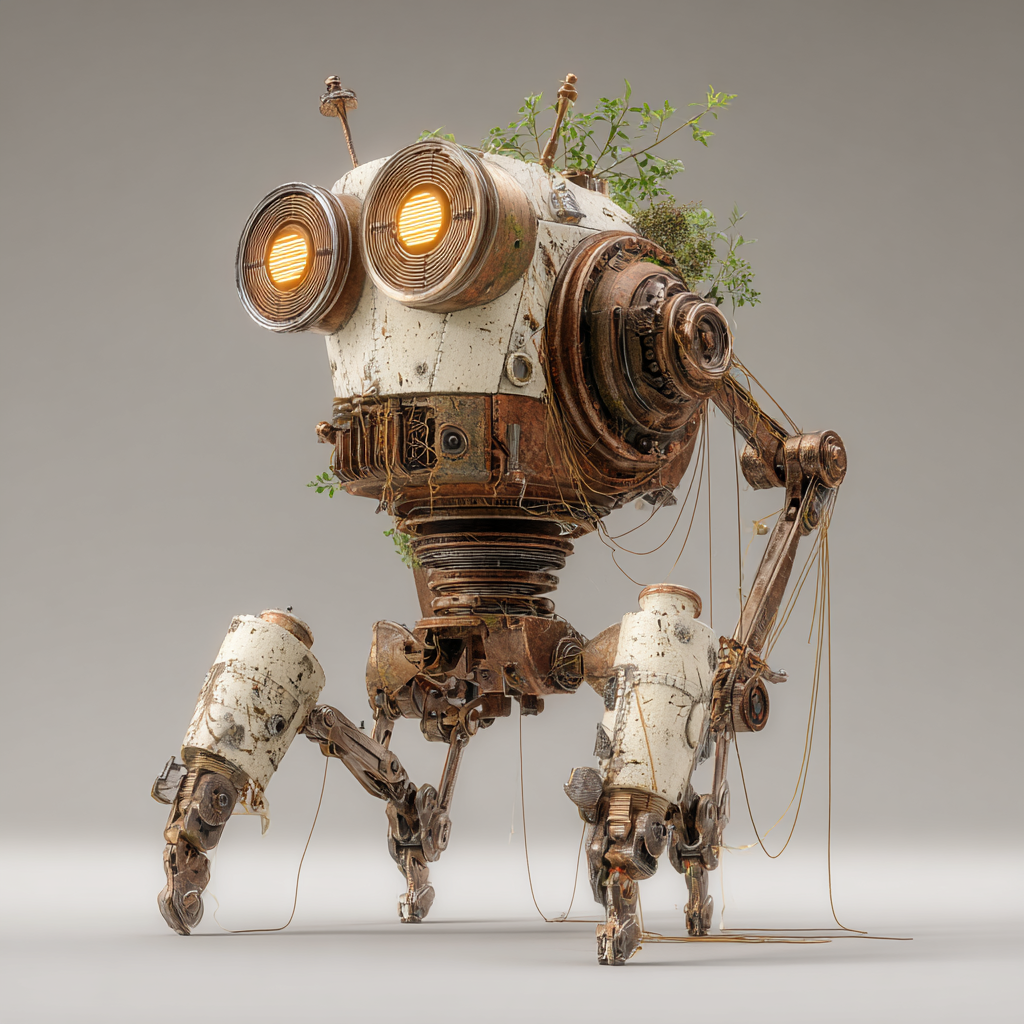
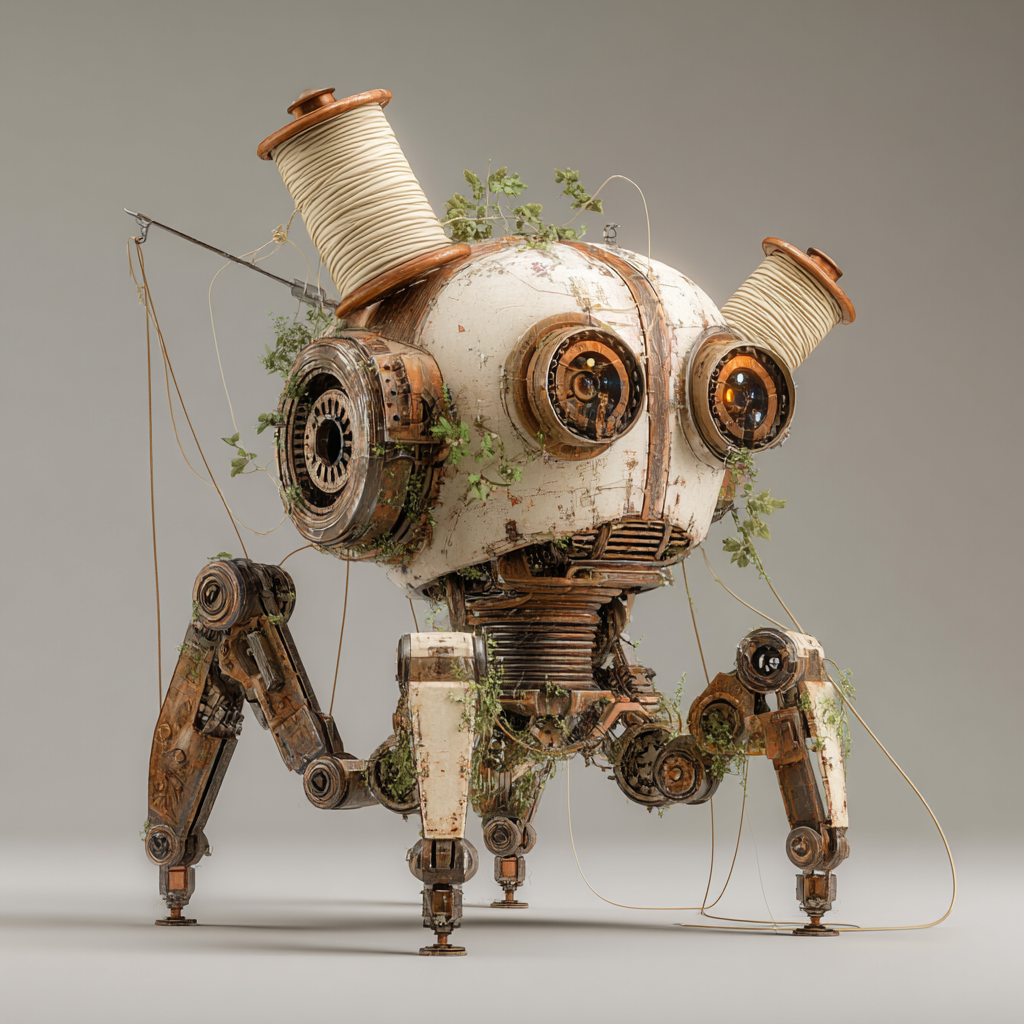
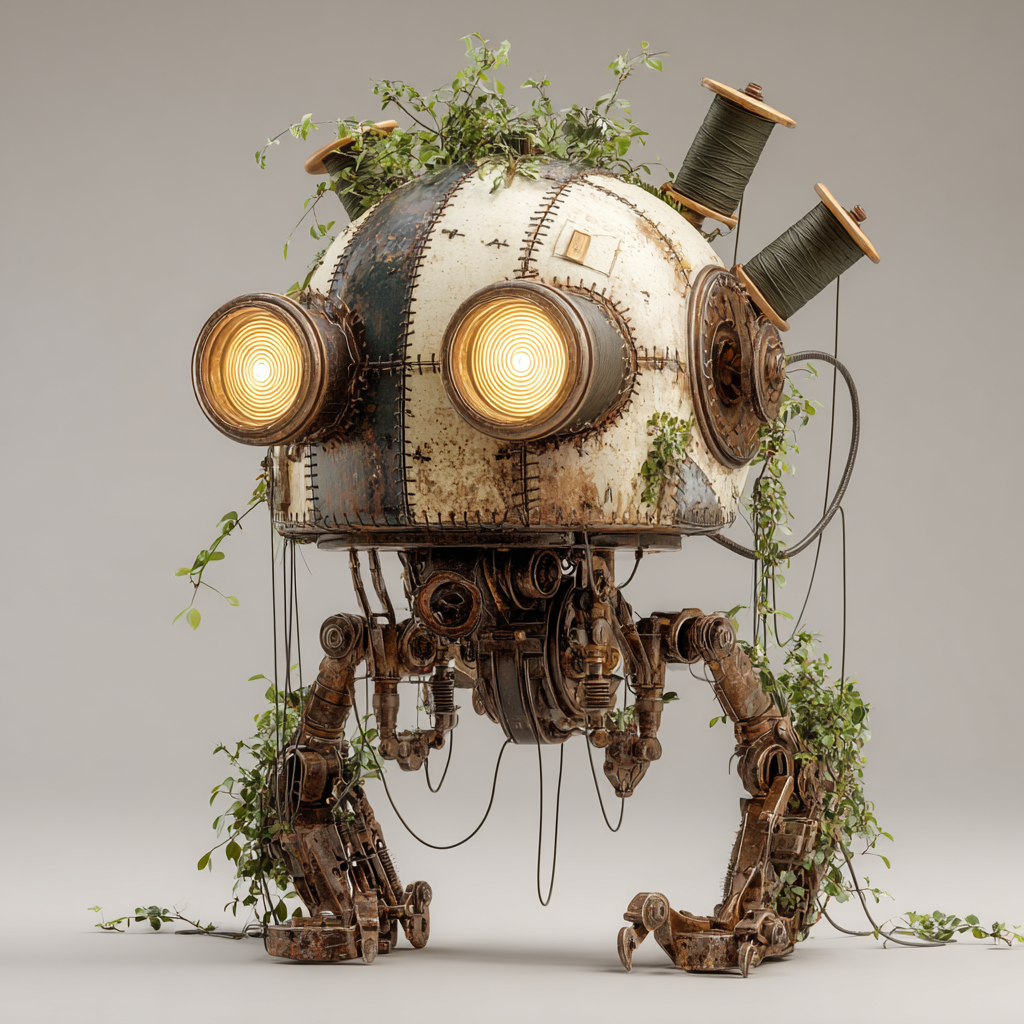
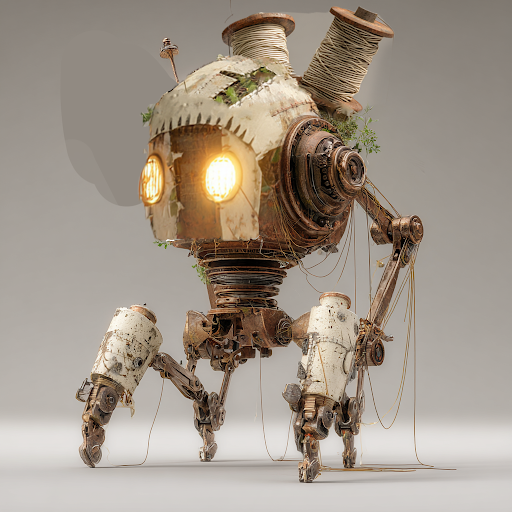
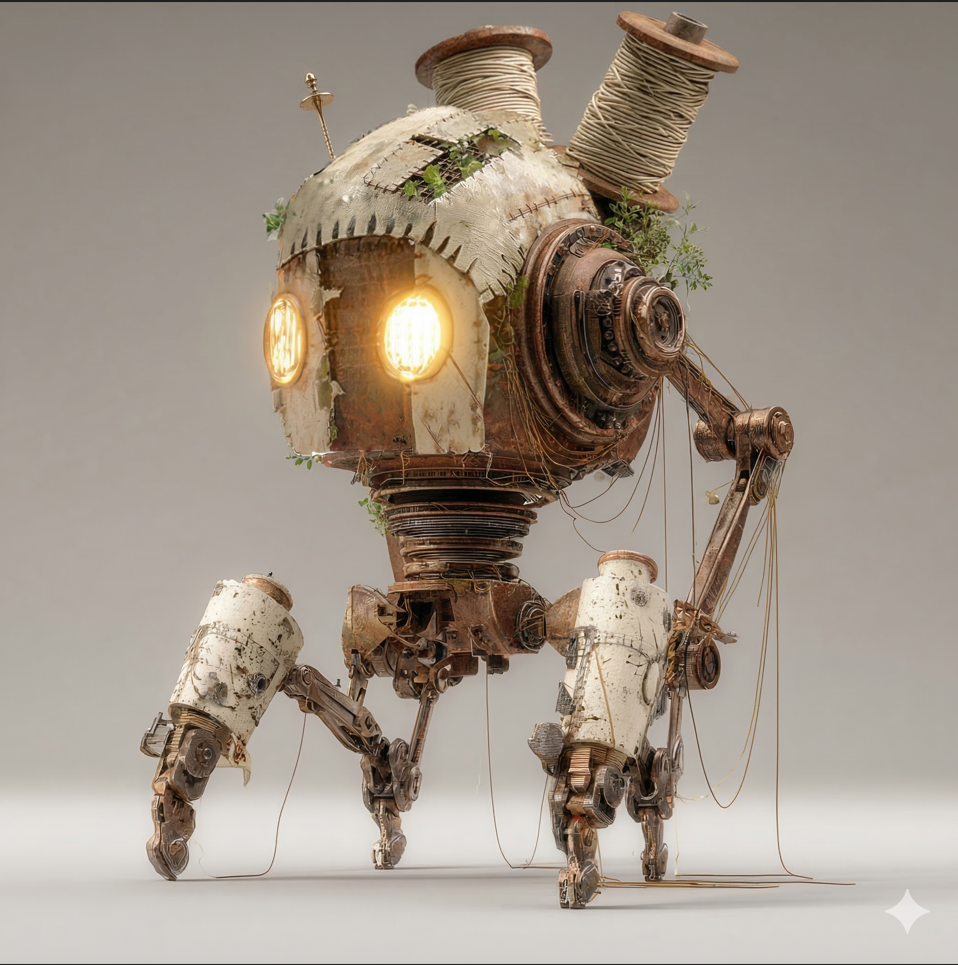
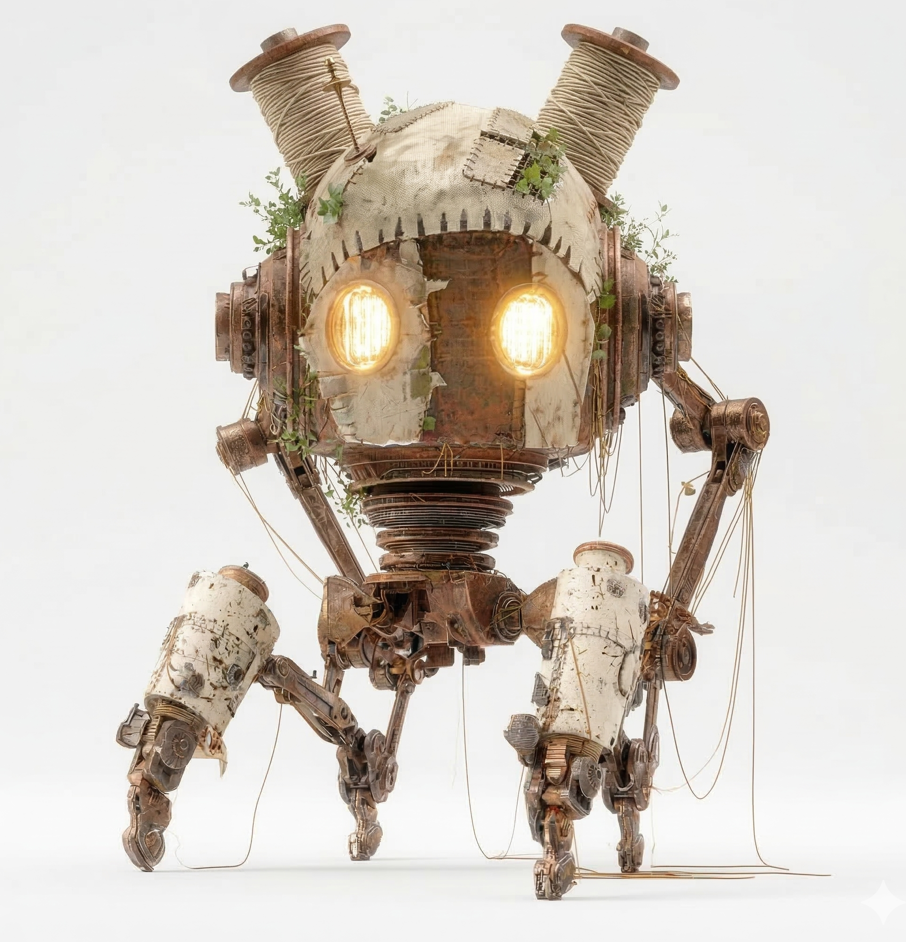
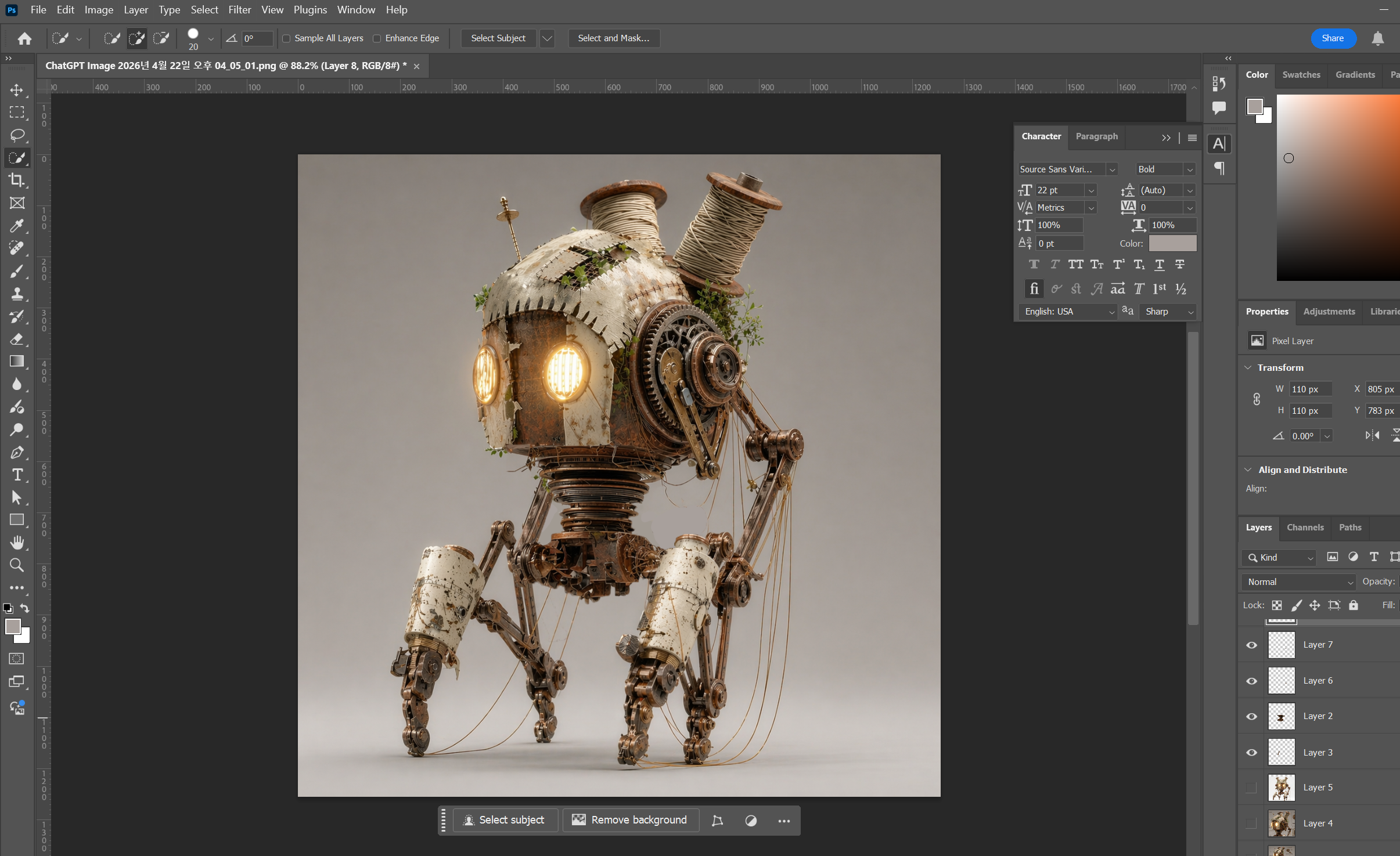
AI image generation was used not to find a finished design, but to explore silhouettes, textures, and mechanical moods quickly. The results ranged from disturbing to inspiring — each one interrogated for what it revealed about direction.

Key Prompts Used
Prompt 01 · Initial Direction
small repair robot, post-apocalyptic workshop, worn metal, stitched cloth, warm light, steampunk, character design, full body
Prompt 02 · After Pivot
gentle repair robot, bipedal, asymmetric arms, sewing needle attachment, rust and thread, fairytale aesthetic, abandoned world, soft glow
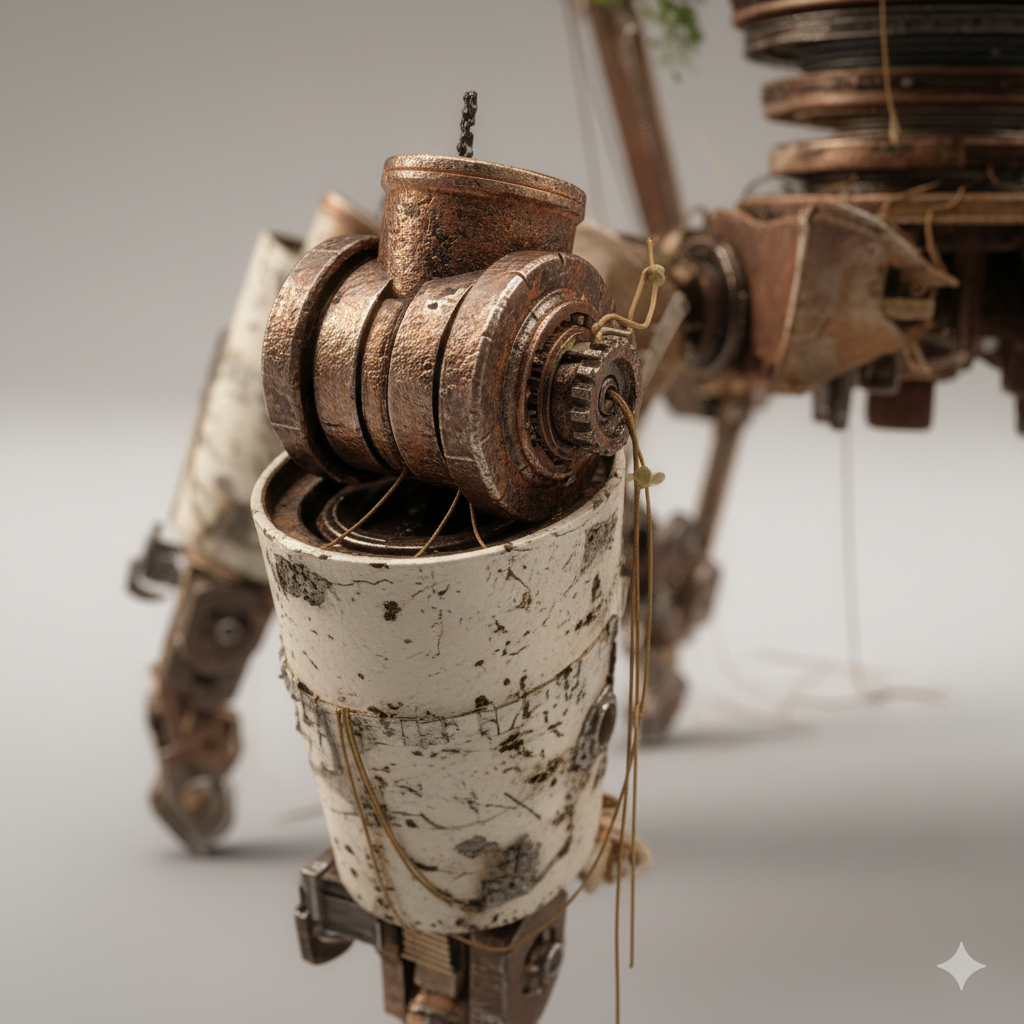
Prompt 03 · Texture Focus
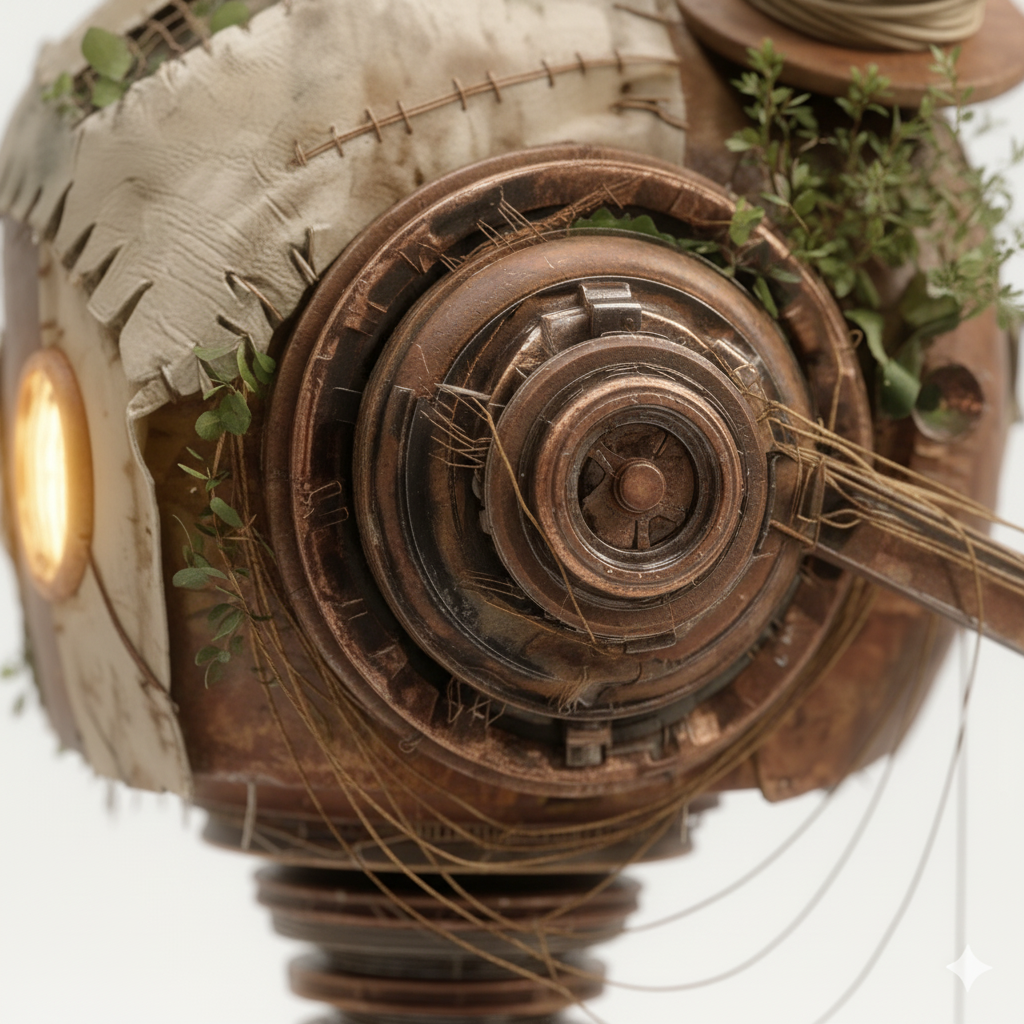
close up robot texture, patchwork metal, hand-stitched repairs, corroded gears, warm amber light, old machinery
Candidate Images — Selection & Rejection Log
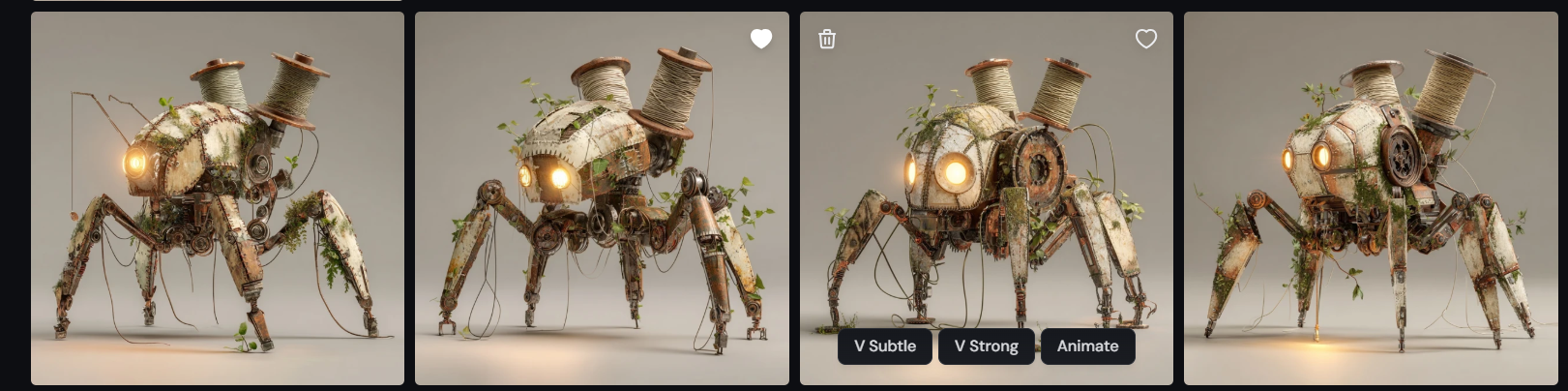
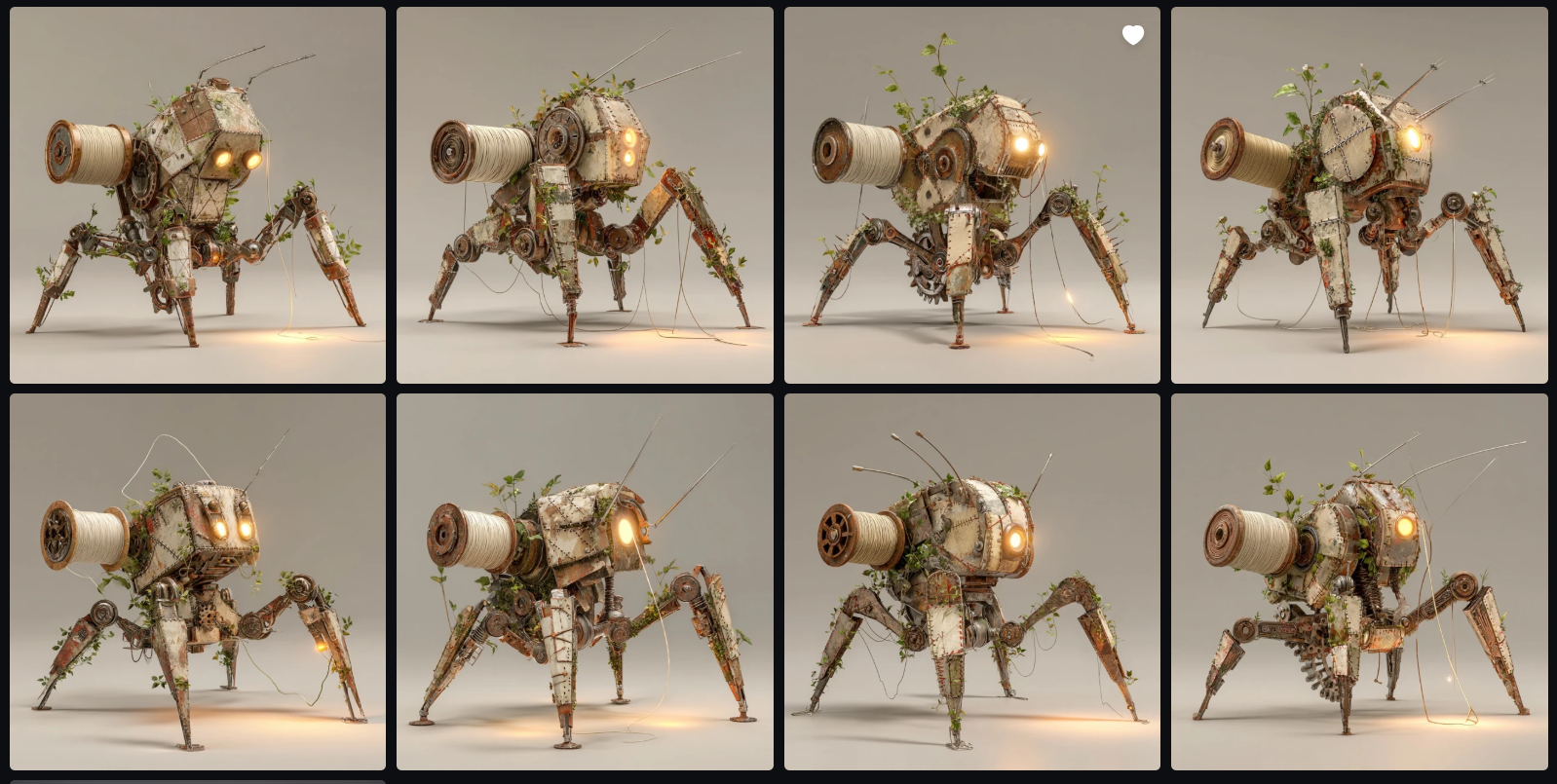
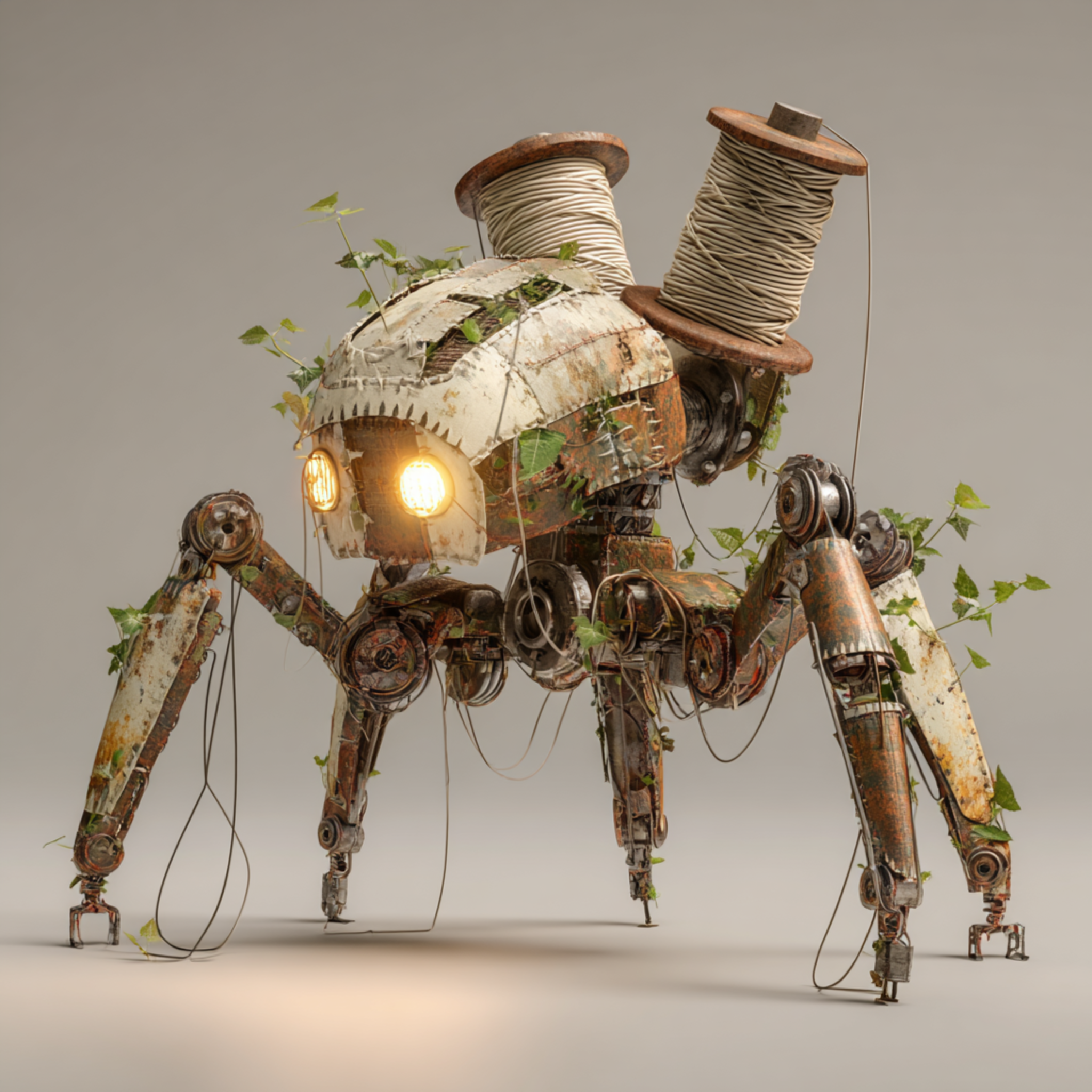
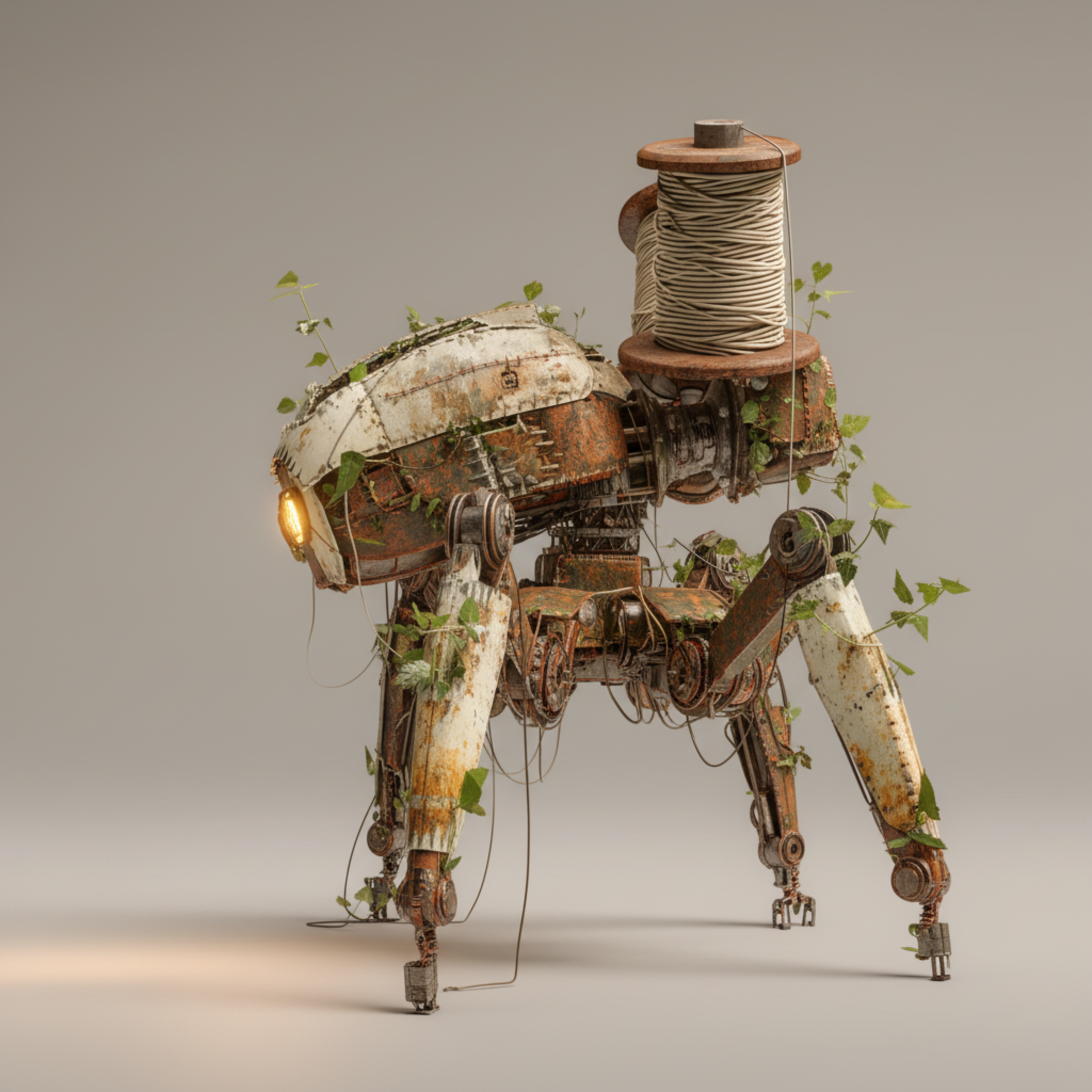
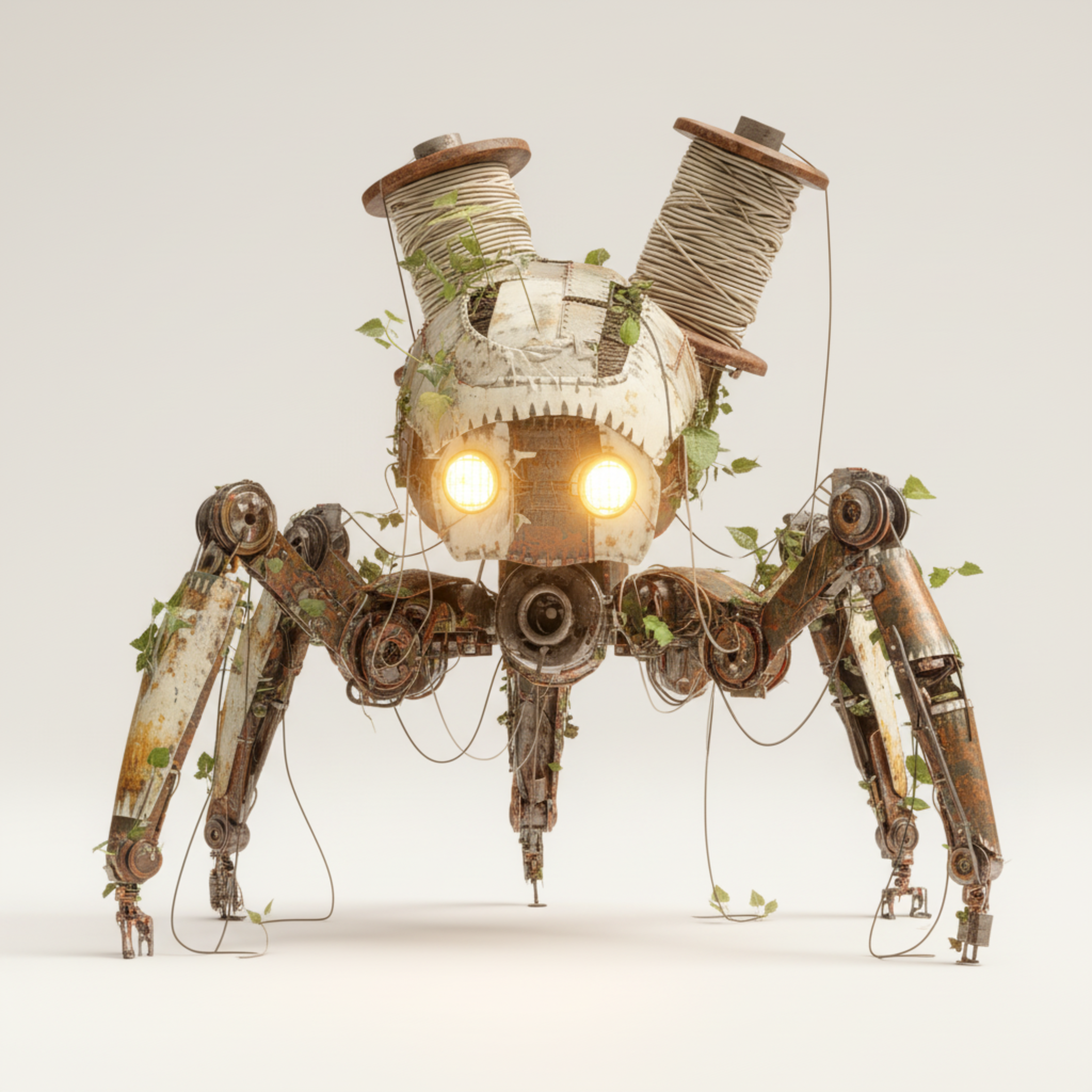
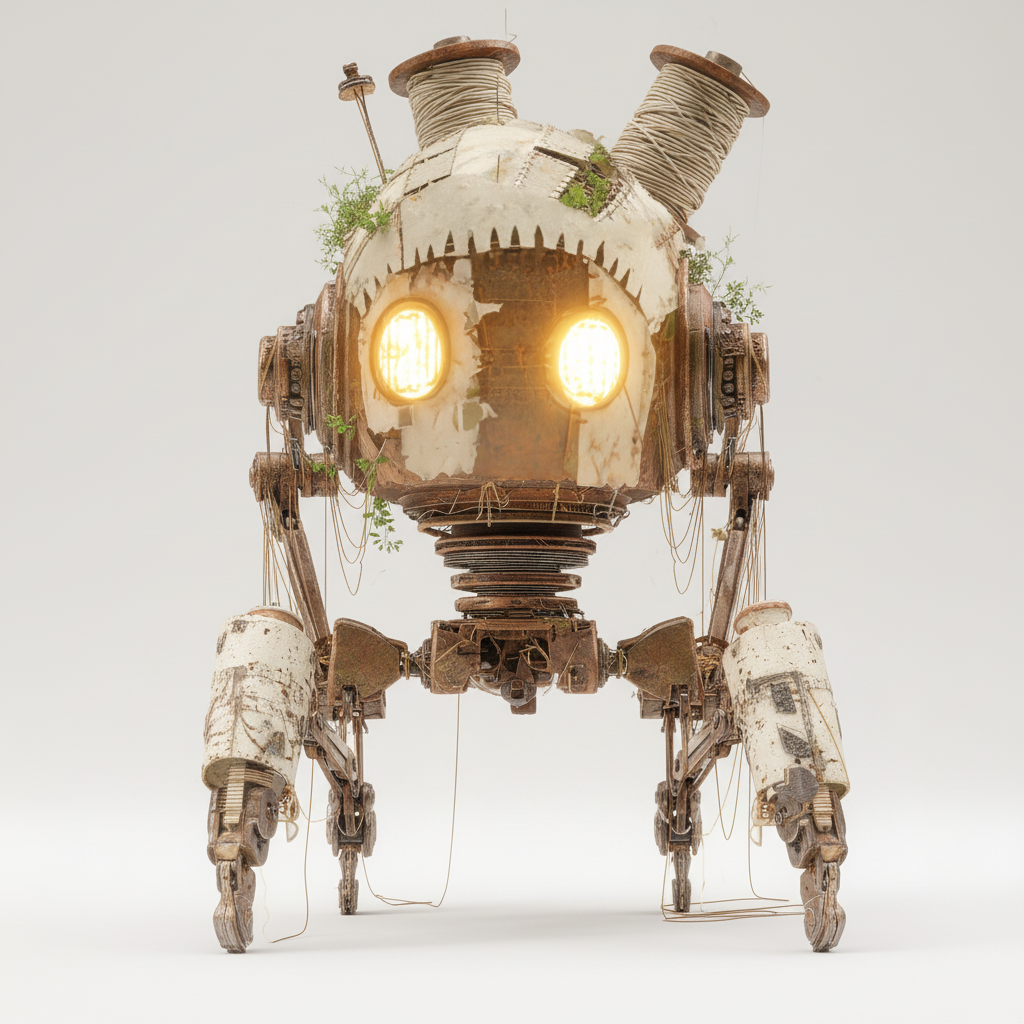
AI candidate 1
Rejected
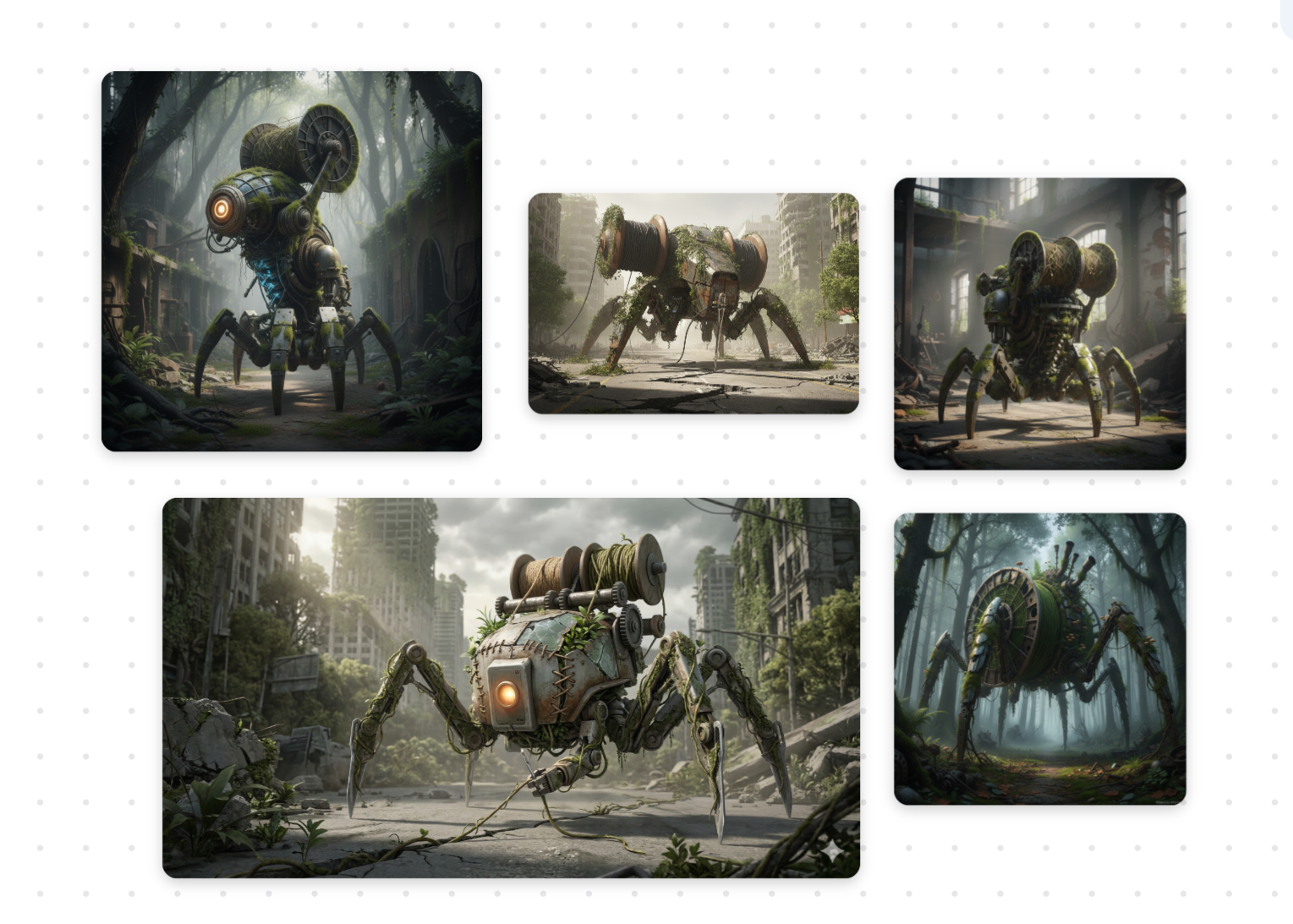
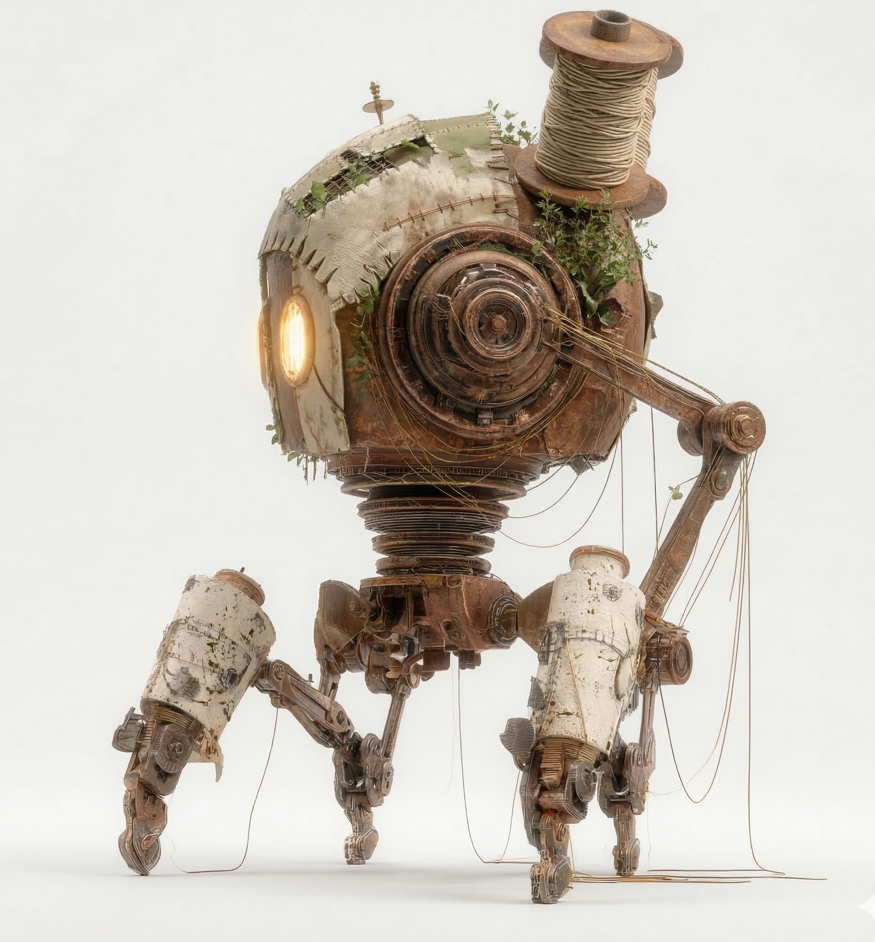
Too unsettling — spider-like, 8-legged. Abandoned this direction.
AI candidate 2
Partial
Interesting silhouette — arm structure noted for reference.
AI candidate 3
Partial
Texture mood useful — warmth of light captured here.
AI candidate 4
Rejected
Too mechanical, too cold. Missing warmth.
AI candidate 5
Selected
Head shape and eye glow — directly influenced final design.
AI candidate 6
Partial
Body proportions referenced for scale study.
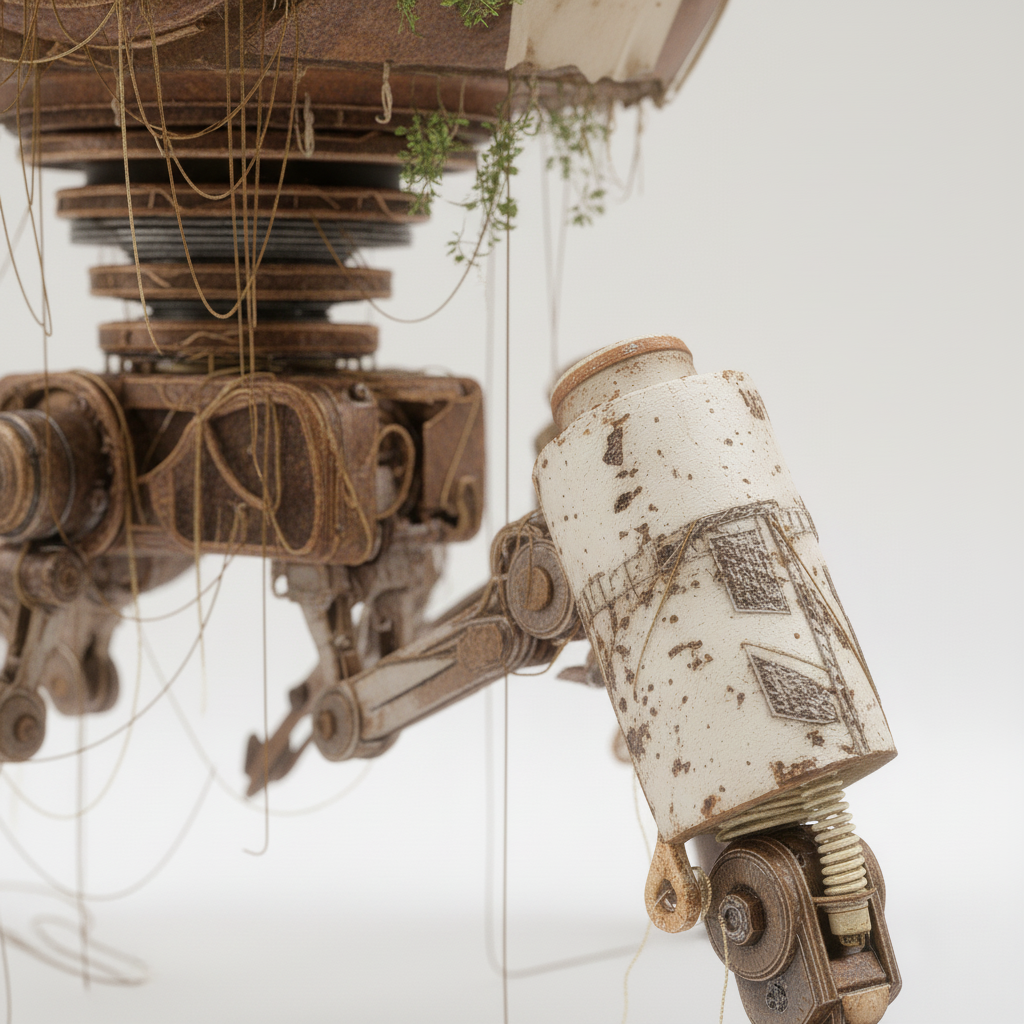
AI candidate 7
Partial
Thread/spool detail — influenced attachment design.
AI candidate 8
Rejected
Too humanoid — lost mechanical character feel.
AI candidate 9
Selected
Stitch needle arm concept — key inspiration for right arm.
Further Exploration — Narrowing the Design
AI candidate 10
Partial
Warm ambient light study.
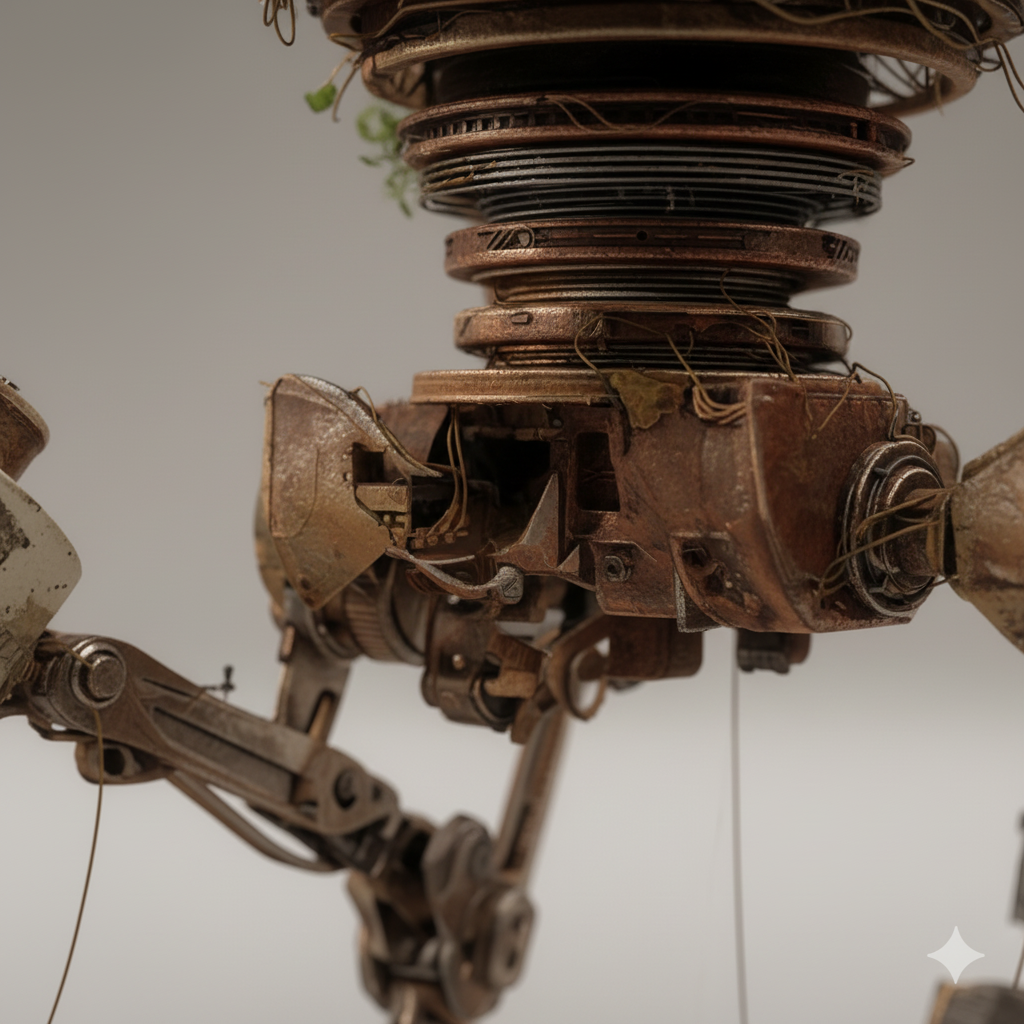
AI candidate 11
Partial
Leg joint structure — referenced for stability design.
AI candidate 12
Rejected
Overly complex — too many elements competing.
AI candidate 13
Selected
Overall warmth and worn texture — closest to final tone.
AI candidate 14
Partial
Background decay texture referenced.
AI candidate 15
Selected
Final proportions and posture — confirmed bipedal direction.
AI images were never used directly. Each was examined for one usable element: a silhouette, a texture mood, an arm attachment idea, a light quality. The final design emerged from selecting fragments across 15+ candidates and building something none of them alone suggested.
REC · 04 / 09

Design Evolution

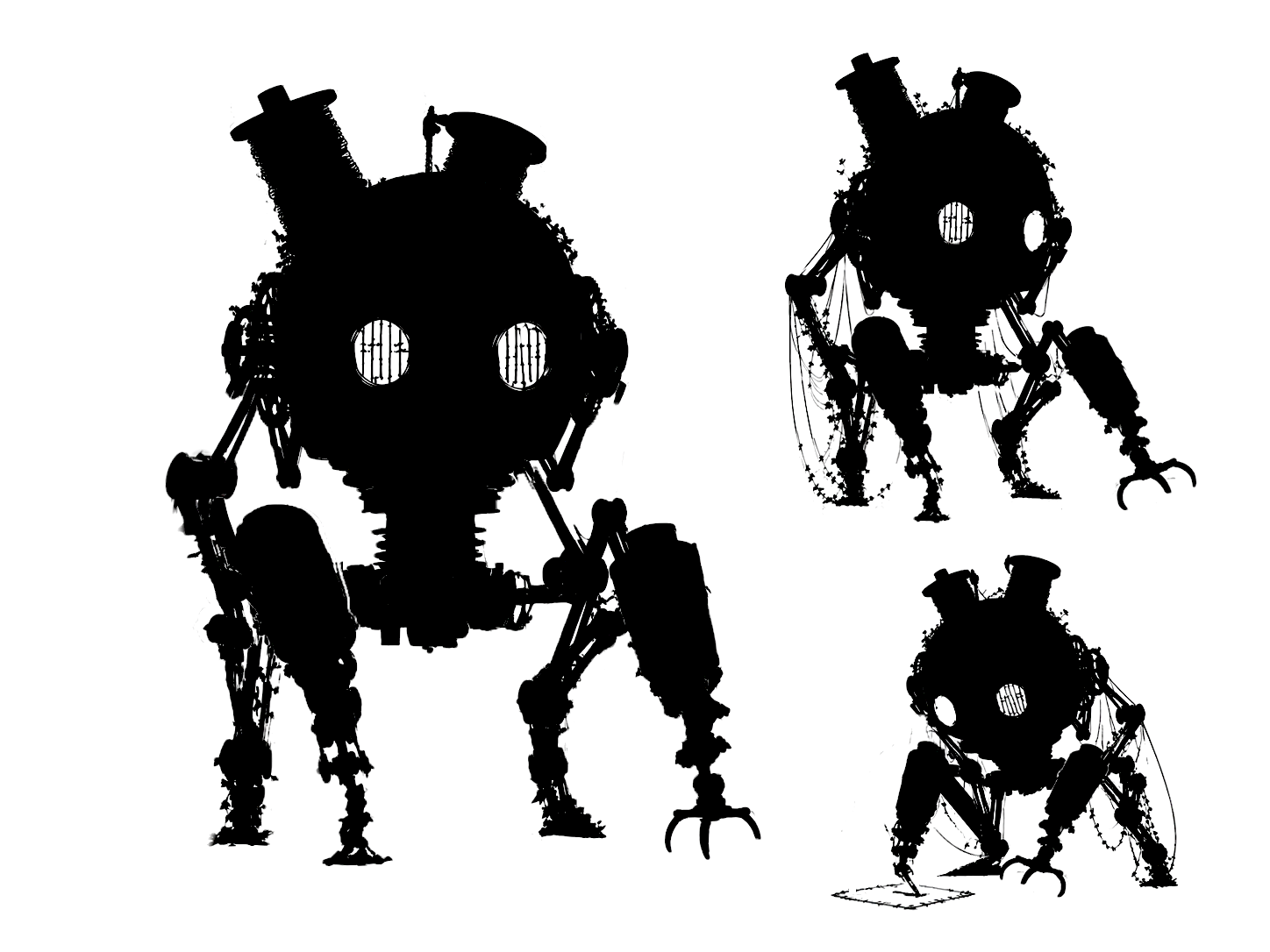
Silhouette Study · Structure · Character Refinement

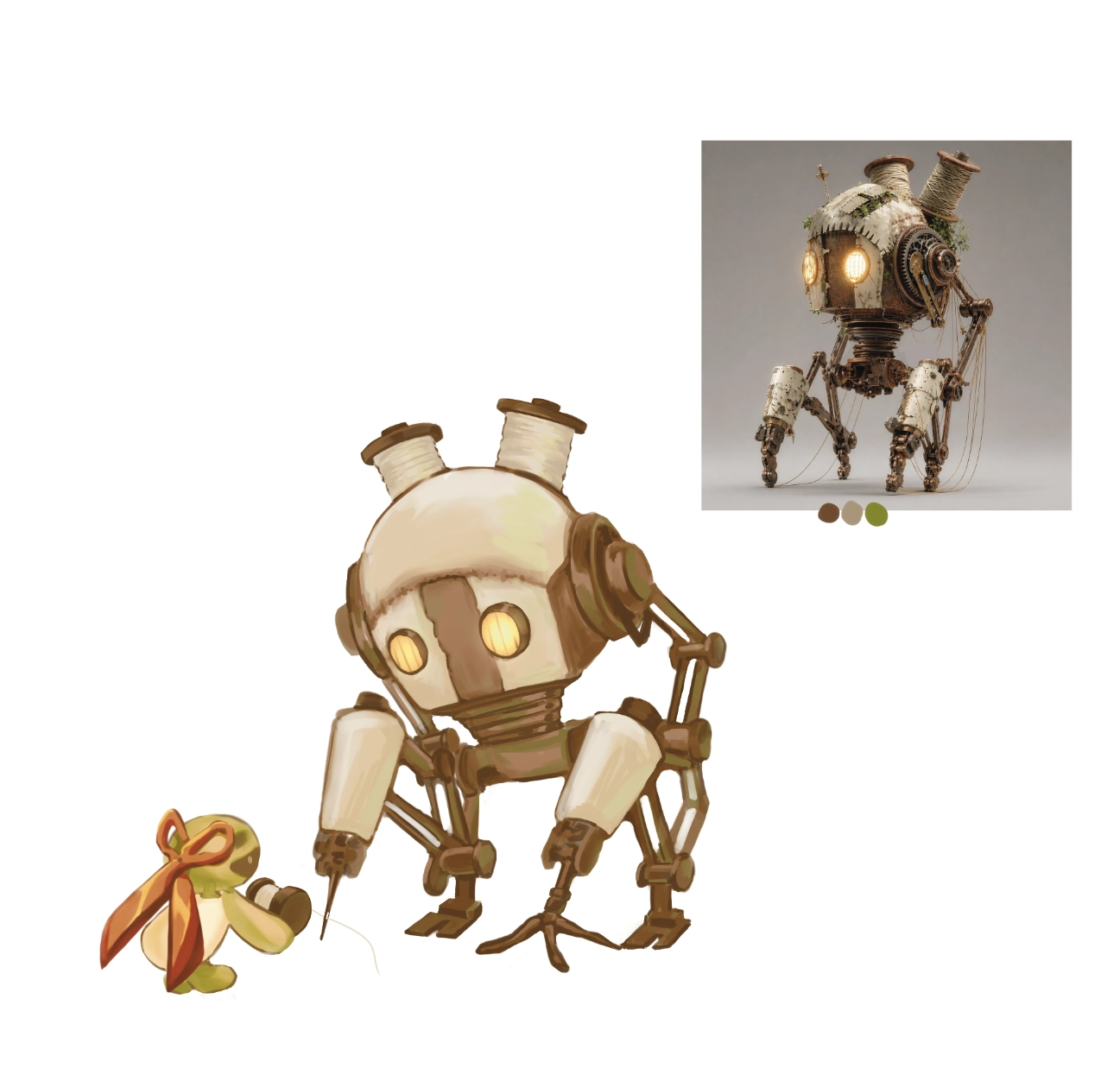
The earliest form of MATI-42 was a four-legged spider-type repair unit. Testing revealed an uncanny valley problem: the multi-legged silhouette created an unsettling, predatory impression that contradicted the character's warmth.

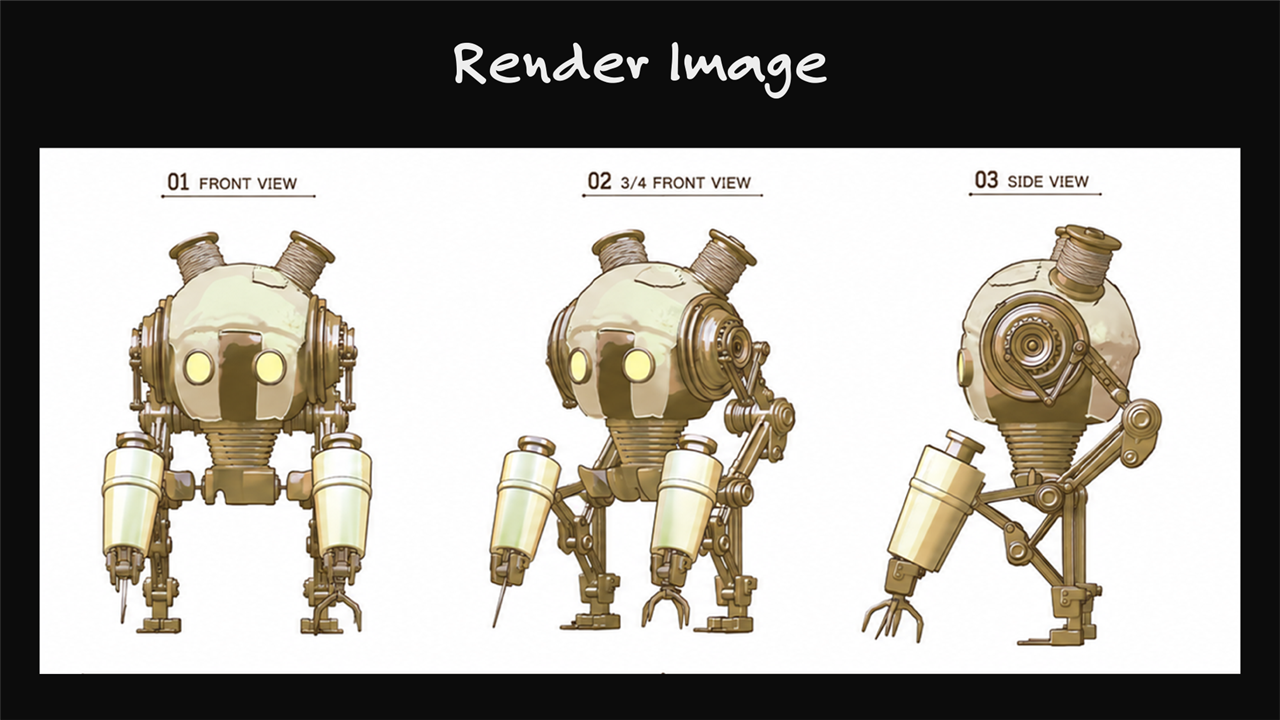
The final design pivots to a bipedal base with auxiliary grounding limbs — maintaining mechanical stability while achieving a more approachable presence. The arms are asymmetric by function: left carries a Holder/Clamp assembly, right carries the Stitch Needle.

Silhouette Development
Silhouette study
Silhouette study — reading at a distance
Silhouette variants tested
Silhouette refinement
Refined bipedal silhouette
After pivot to bipedal form
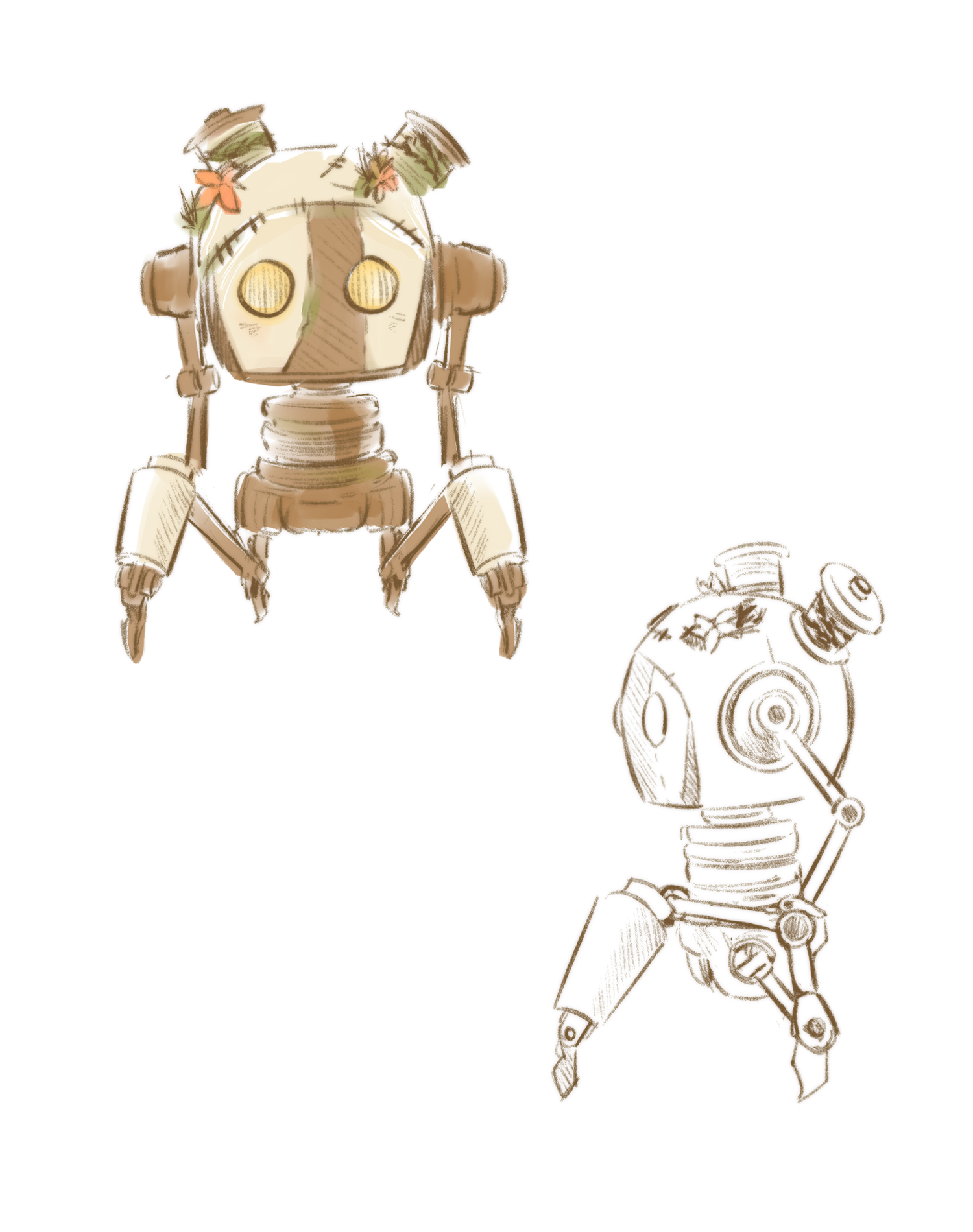
Structure sketch
Structural sketch — arm role separation
Arm function assignment
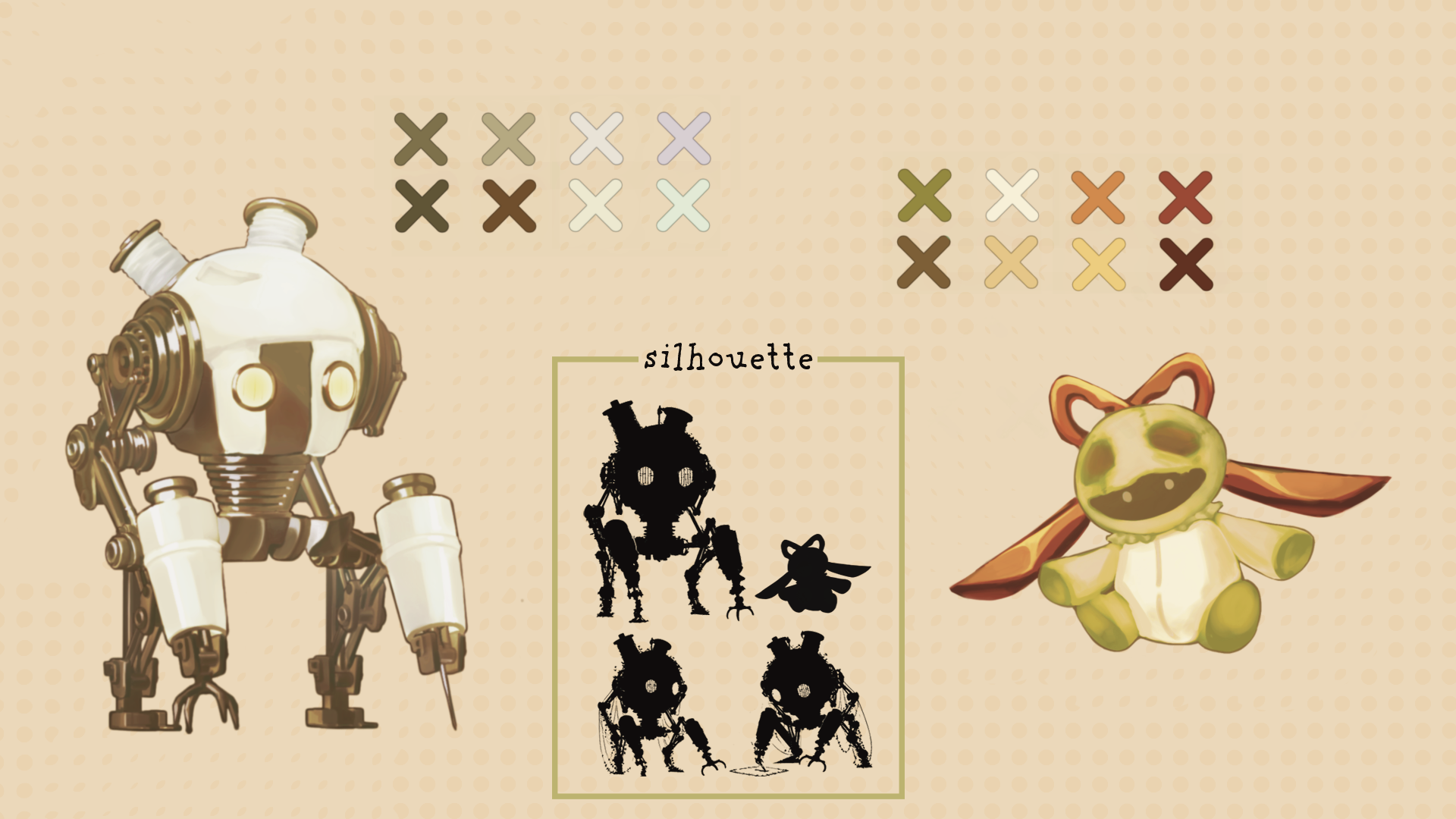
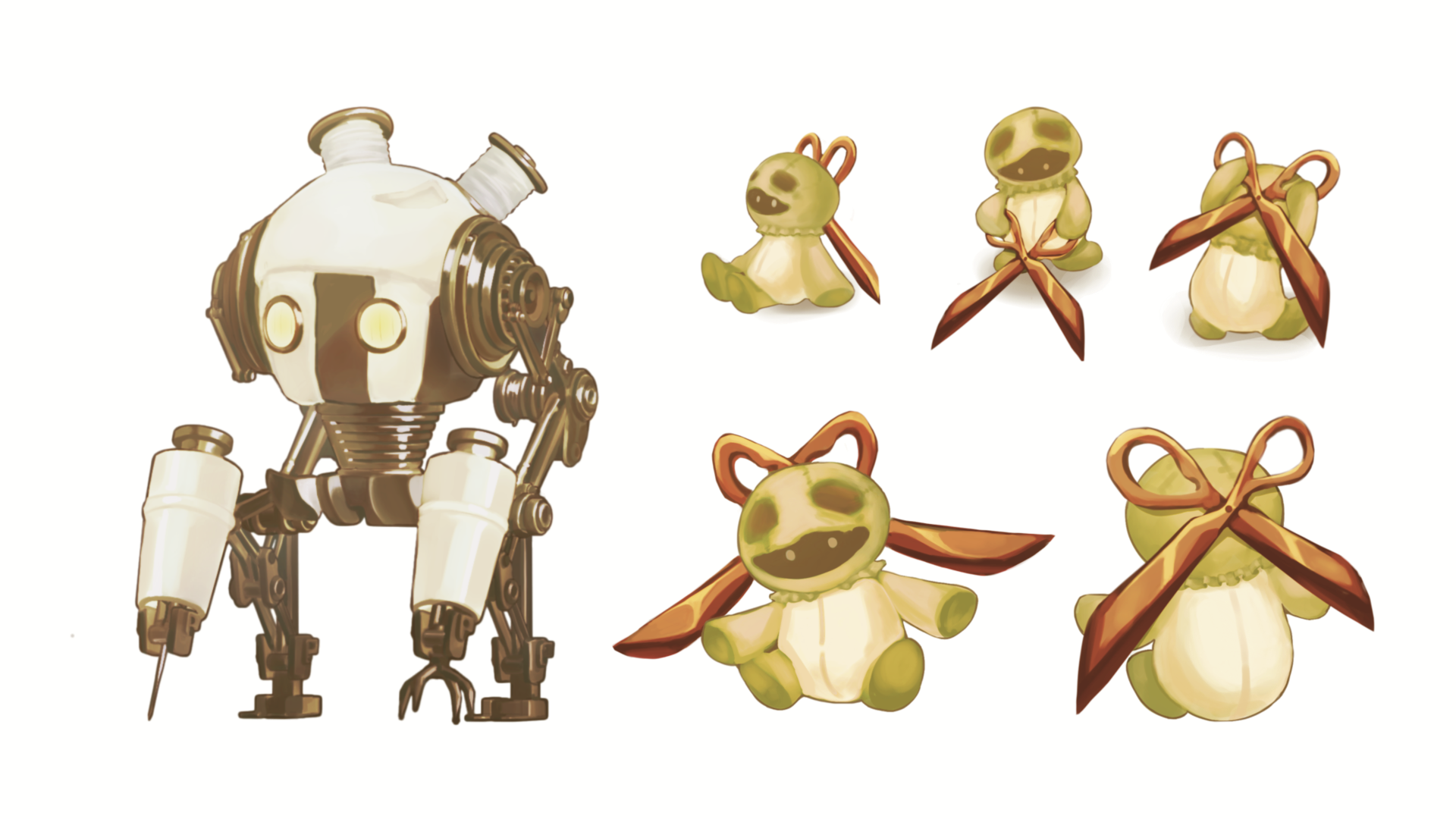
Character Design Sheet
MATI-42 character design
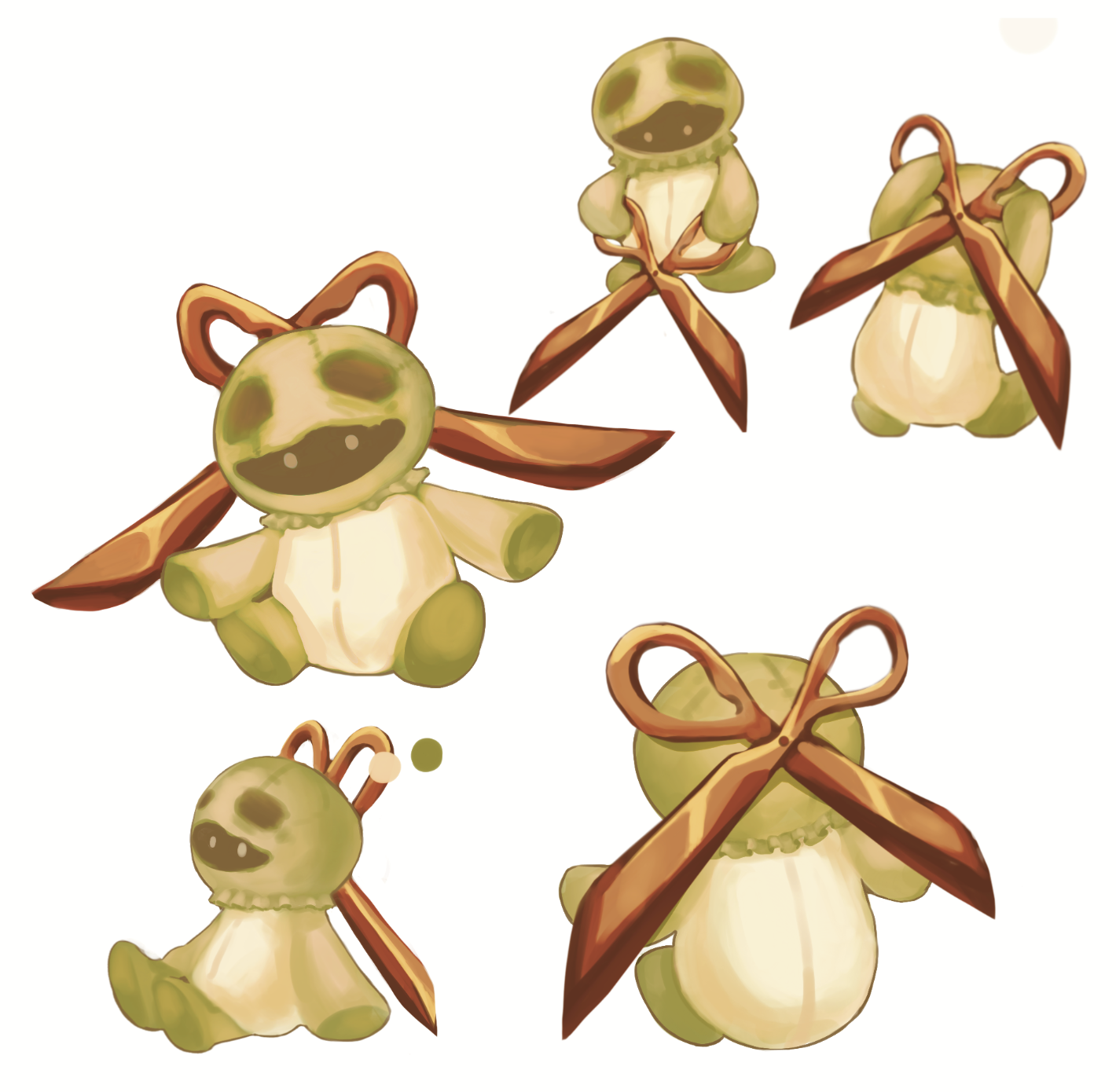
MATI-42 full character + mascot reference
Design Rationale
PartDecision
HeadRound with warm eye glow — empathy over threat
Left armHolder / Clamp — stability and grip
Right armStitch Needle — primary repair tool
LegsBipedal + auxiliary grounding — stable, approachable
BodyPatchwork panels — shows its own history of repair
MaterialsRust, thread, worn cloth — not pristine machine
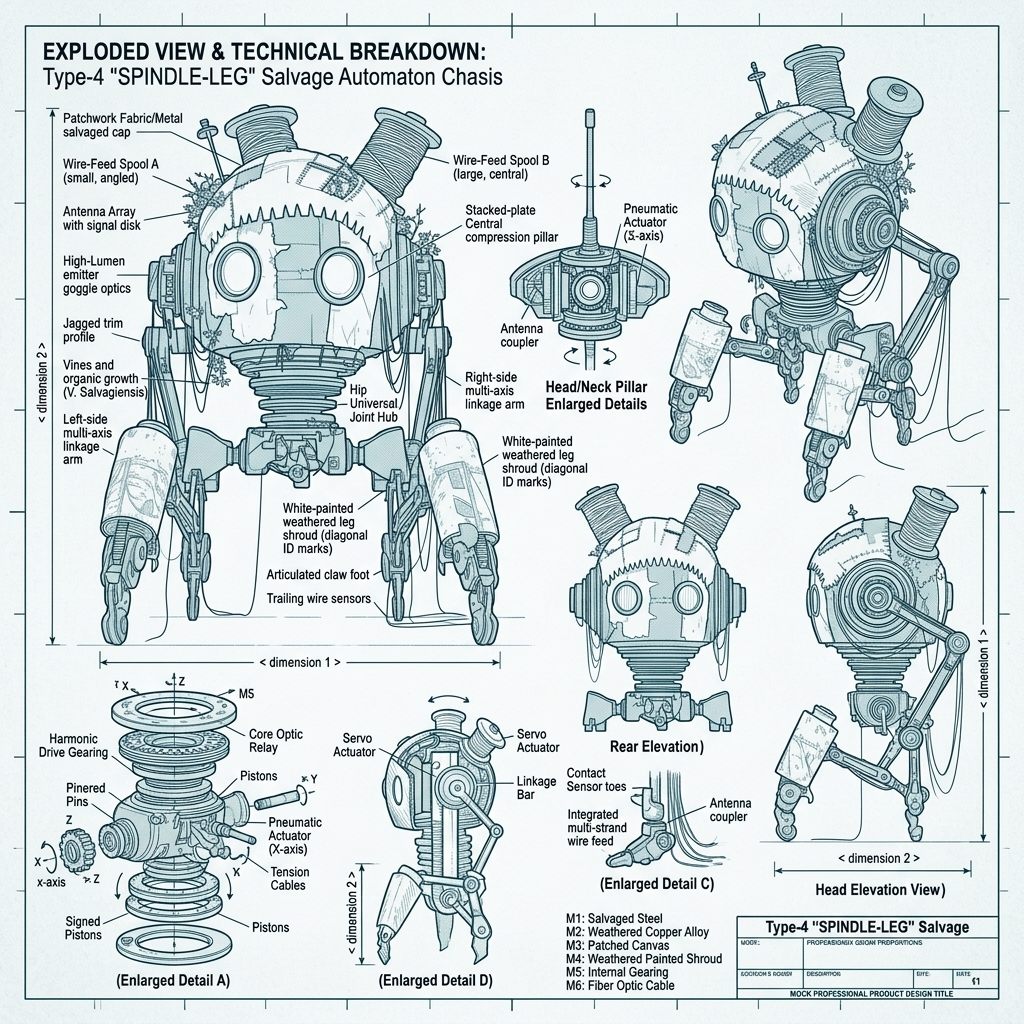
Design Specification Drawing
Detailed design explanation drawing
Annotated design specification — structural and functional breakdown
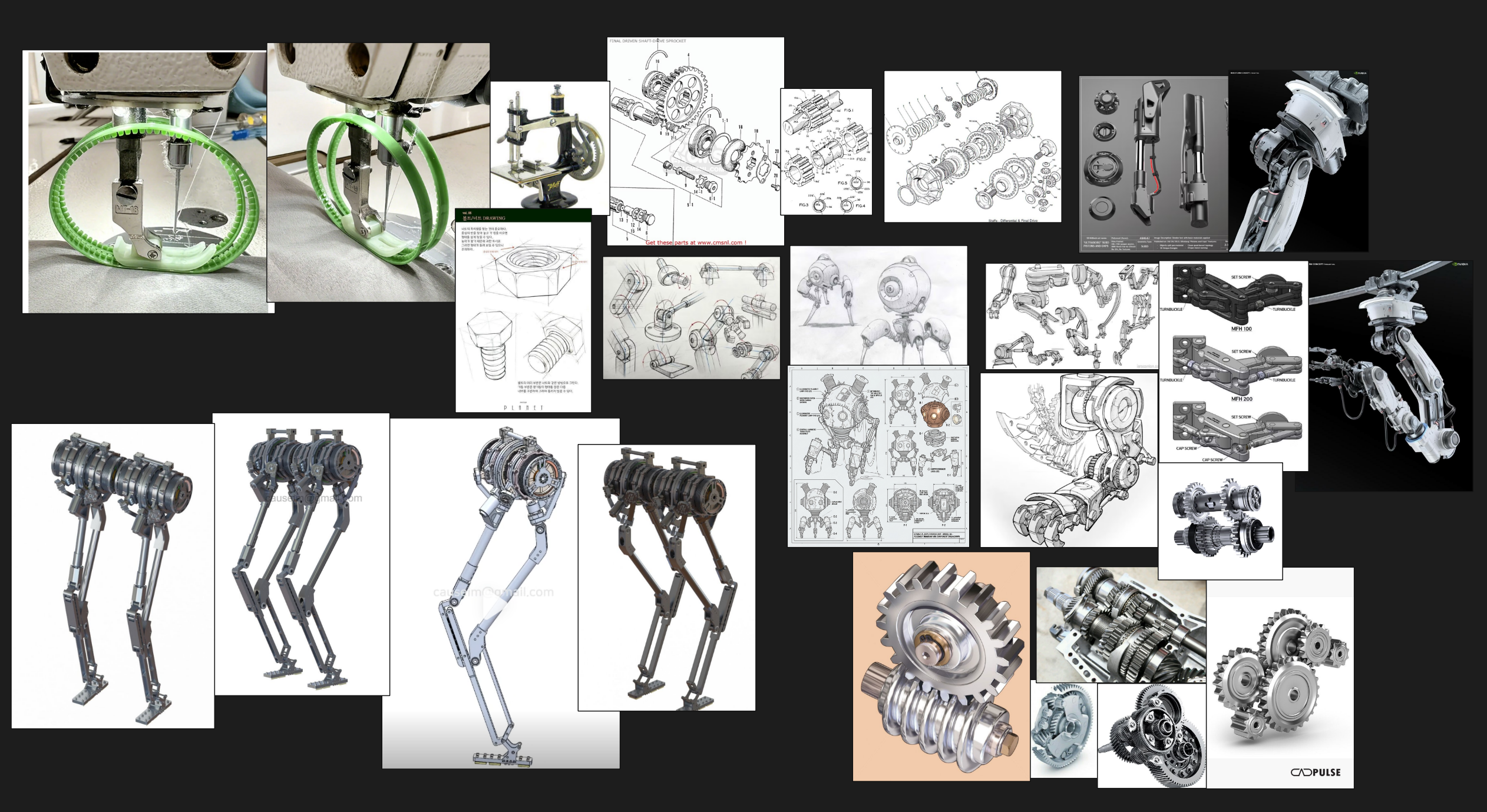
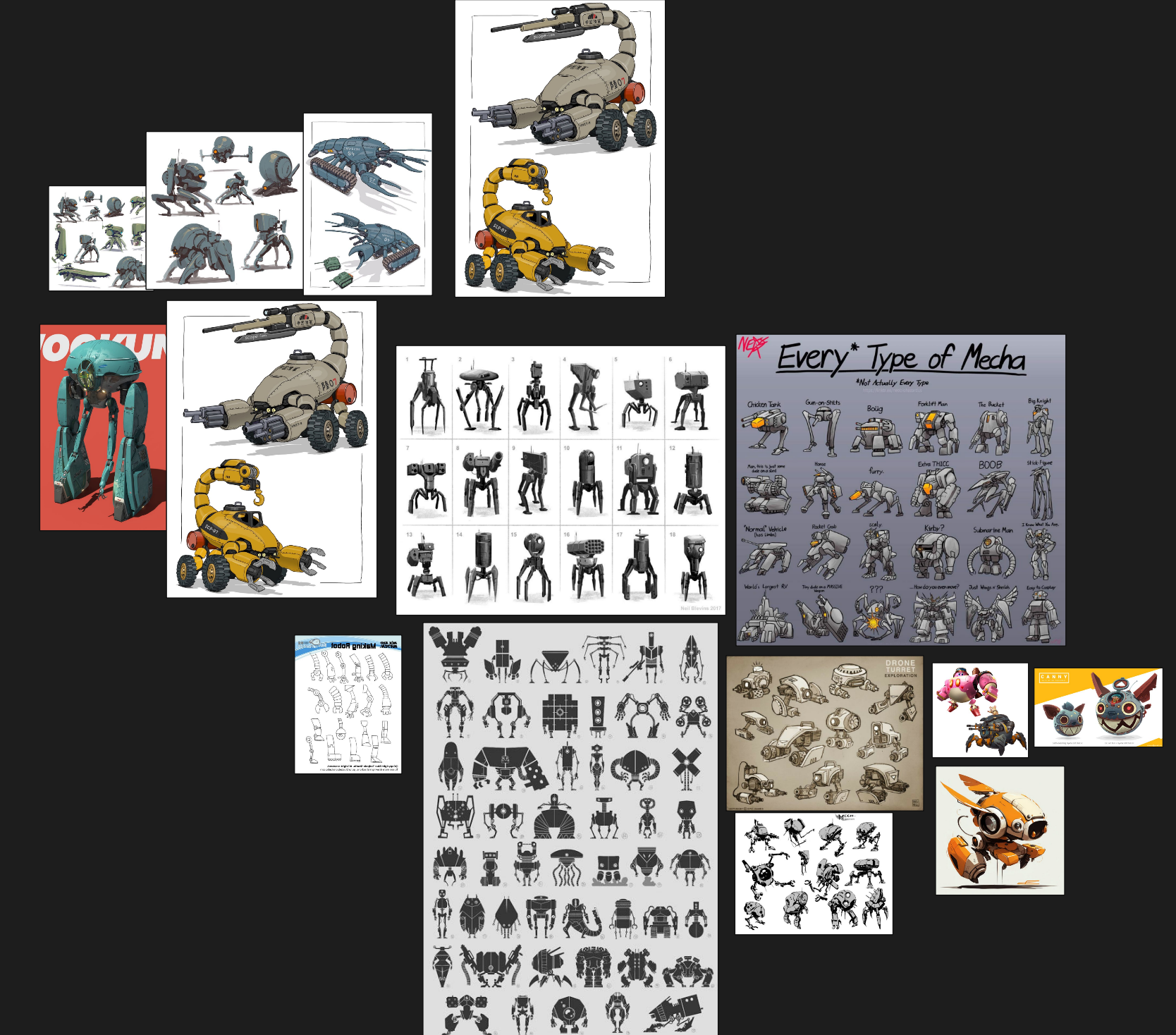
Reference Boards
Modeling/structure reference board
Structure reference board
Design reference board
Design language reference board
REC · 05 / 09

Assembly Record

3D Modeling · Structure · Part Breakdown

TURNTABLE — Early Model · 360° Review
Front Reference · Base Model
MATI-42 front view
Front orthographic — base model
Part Breakdown
Phase A
Body Core
Central torso block. Established overall proportion. Kept slightly barrel-shaped for warmth.
Phase B
Head & Eyes
Rounded dome head. Eye sockets designed for warm glow emission. Multiple revisions on eye scale.
Phase C
Arms — Asymmetric
Left: multi-joint clamp assembly. Right: needle arm with thread spool. Role-separated from concept.
Phase D
Leg & Ground System
Bipedal primary legs + auxiliary contact points. Required several joint iterations for stable grounding.
Part Details
Head detail
Head detail — eye cavity and sensor nodes
Leg detail
Leg joint — primary limb
Leg detail 2
Leg detail — joint articulation
Body lower detail
Lower body + base connection — structural assembly
Modeling progress screenshot
Modeling progress — in-session view
REC · 06 / 09

Surface Record

Materials · Texture · UV · Render Style

MATI-42's surface is its history. Every patch, rust bloom, and repaired seam tells a story of prior damage and self-correction. The texture work prioritized surface narrative over technical cleanliness.

Material Breakdown
MaterialApplicationWorld Connection
Corroded Metal Primary body panels, joints Age — has been working a long time
Patched Cloth Soft body sections, cushioning Repaired itself — using materials it found
Thread / Twine Seams, arm wrapping, spool Its own repair medium, visible on its body
Warm Glass Eye lenses The only part that is clean — still cared for
Aged Wood Small decorative panels Scavenged from its environment
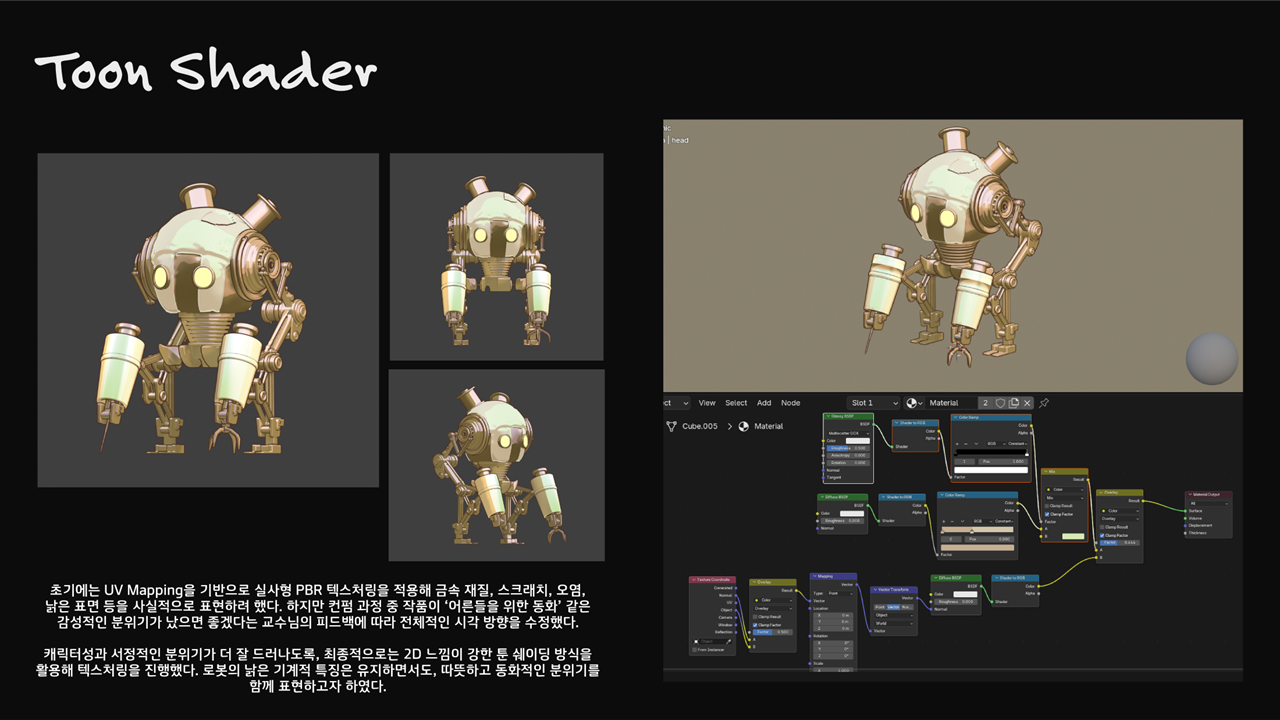
Toon Shader Render style Fairytale / illustrated book aesthetic
Surface & Render Studies
Render test / texture slide
Toon render test — surface material reading
Texture detail slide
Texture detail study — worn surface breakdown
Render slide 6
Lighting render test — warm ambient
Kinematic / surface reference
Joint surface reference
Texture reference
Texture / material reference
The toon shader was chosen not for stylization alone, but because it reads like an illustration from a worn storybook — which is exactly the emotional register the project was aiming for. Technical realism would have undermined the warmth.
REC · 07 / 09

Movement Test

Rigging · Kinematic Chain · Animation Attempt

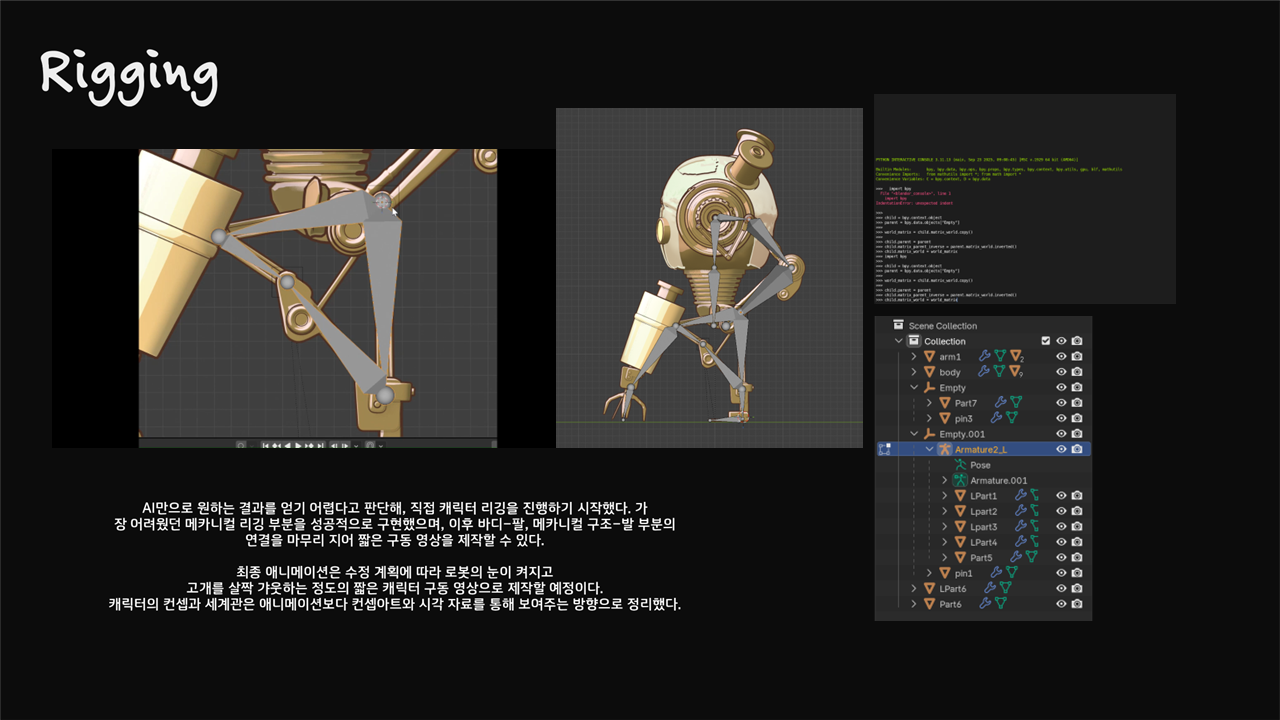
Rigging MATI-42 was the most difficult phase. The multi-joint leg structure and asymmetric arms required careful weight painting to avoid deformation artifacts. The animation direction sought to be mechanical but clumsy — not a perfect machine, but one that has learned movement through trial.

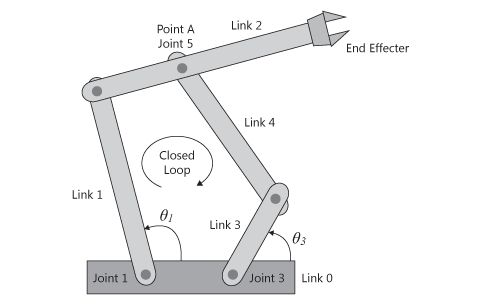
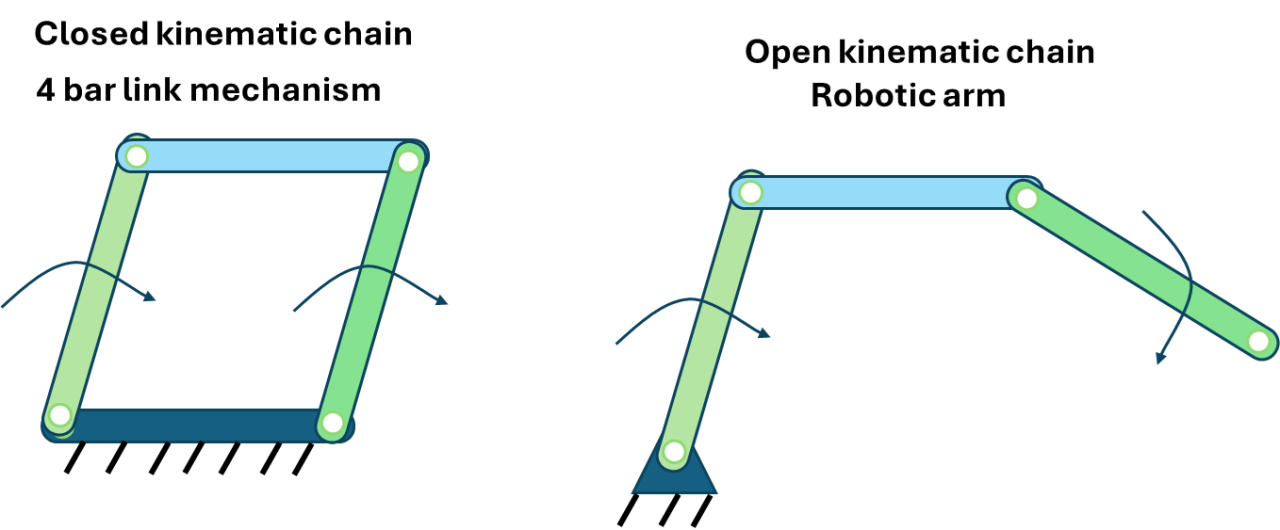
KINEMATIC CHAIN · Structure Reference
AI MOVEMENT REFERENCE · Structural Study
BLENDER WORK SESSION · Animation Process
Rigging Process Log
Step 01
Armature Setup
Bone hierarchy established for body → limbs → fingers (needle/clamp). IK chains set on legs.
Step 02
Weight Painting
Joint deformation required multiple passes. Soft body cloth sections needed separate vertex groups.
Step 03
Walk Cycle Attempt
Keyframe walk cycle built for primary legs. Asymmetric arms animated separately with slight lag for personality.
Step 04 · Issue
Rigging Problem → Pivot
Complex joint count caused clipping and deformation issues. Full animation walk cycle was deprioritized in favor of the turnaround render.
The goal was never fluid perfection. MATI-42 should move the way it looks — a little worn, a little uncertain, but deliberate. A machine that has learned kindness through repetition, not design.
REC · 08 / 09

Final Archive

Final Renders · Turnaround · Character in World

FINAL TURNAROUND · MATI-42 · Complete Model
Final Render Gallery
World Setting · MATI-42 in Context
World setting render
The world MATI-42 moves through — abandoned, warm, waiting
Final Output Summary
DeliverableStatusNotes
3D ModelCompleteFull body, all parts
Turnaround VideoComplete300 frames, smooth rotation
Concept Art RendersComplete3 environment renders
Character Design SheetCompleteWith mascot
Walk AnimationPartialRigging issues — deprioritized
Texture / UV CompleteCompleteToon shader applied
REC · 09 / 09

Repair Memo

Reflection · What Was Learned · What Was Repaired

The original goal was a complete short animation — MATI-42 walking, interacting with a broken object, stitching it back together. Rigging complexity and time constraints required a pivot.

What emerged instead was richer in concept: the character's structure, world, and emotional language became fully articulated even if its movement remained limited. A medium changed; the project grew.

Feedback at the midpoint shifted the project from "dystopia" to something quieter — a story of small recoveries in an abandoned world. That pivot made everything better.

What worked

  • World tone — warm, distinctive, consistent
  • AI generation as fragment-mining, not final output
  • Asymmetric arm design — functional and visual interest
  • Toon shader choice matched emotional register
  • Silhouette refinement — spider → bipedal pivot was correct
  • Concept depth exceeded technical output

What would change

  • Earlier rigging plan — joint count managed from model phase
  • More time on weight painting per part
  • Walk cycle — at least a 2-second loop
  • UV layout documented better during process
  • More controlled lighting setup for final renders
Tools Used
Blender Midjourney / AI Image Gen Toon Shader Keyframe Animation UV Unwrapping Weight Painting IK Rigging
Not everything was broken. Some things were simply left unrepaired.
MATI-42 exists for those things.